
Missing a tooth is basically deafening; you notice it when you smile, when you eat, and even when you say certain words. Next thing you know, you’re stuck poring over dentures vs bridges with half a dozen tabs open and still zero idea what to do.
Both can restore function and confidence, but they go about it in different ways; one is fixed, the other is removed every night. Once you grasp that difference, the choice gets a lot more straightforward.
Dentures vs Bridges: What are the key differences?
The main difference between dentures and dental bridges is whether the replacement teeth stay fixed in place all the time. A dental bridge is a fixed restoration that “bridges” the gap where a tooth used to be. It usually includes a replacement tooth (pontic) that’s supported by adjacent teeth next to the gap (abutment teeth) or by implants, and that stays in the mouth permanently.
On the other hand, dentures are removable tooth replacements. That means a daily routine of taking them in and out. They can be full (all teeth in an arch) or partial (several missing teeth while you still have some natural teeth). They can be a great option, but they’ve got a different feel to them.
If you only remember one thing, it’s that bridges tend to feel more like, well, teeth, while dentures are a bit more flexible if you’re replacing lots of teeth all at once.
Bridges and dentures at a glance
| Category | Dental bridge | Dentures (full or partial) |
| Best for | Often 1 to 3 missing teeth in a row | Several missing teeth or an entire arch |
| Fixed or removable | Usually fixed | Removable |
| How it stays in place | Anchored to teeth or implants | Fits over gums; partials may use clasps |
| Cleaning style | Clean around and under | Remove and clean; clean gums too |
| Watch-outs | Support teeth carry the load | Fit changes over time |
A Little More About Dental Bridges
A bridge is a fixed restoration that replaces a tooth, or a few teeth, that are missing. It’s made up of a replacement tooth (pontic) that’s supported by teeth next to the gap (abutment teeth) or by implants. Because they are fixed, many people like the stability and confidence that dental bridges provide. The catch is that if the remaining natural teeth next to the gap are weak, decayed, or have gum disease, a bridge may not be the best option.
There are different materials and designs to choose from, depending on the gap, your bite, and what you want the dental bridge to look like. Some people talk about zirconia, ceramics, or porcelain fused to metal. If you’re comparing quotes, feel free to ask us at DSA about the materials we’ll be using and why, and how you’ll be able to clean under the pontic.
Some bridges are designed to be more conservative, while others are built for strength. There are traditional bridges which use dental crowns on both neighboring teeth, cantilever bridges which use support on one side only, and resin-bonded (Maryland) bridges which use “wings” bonded to the back of nearby healthy teeth.
What Are Full and Partial Dentures?
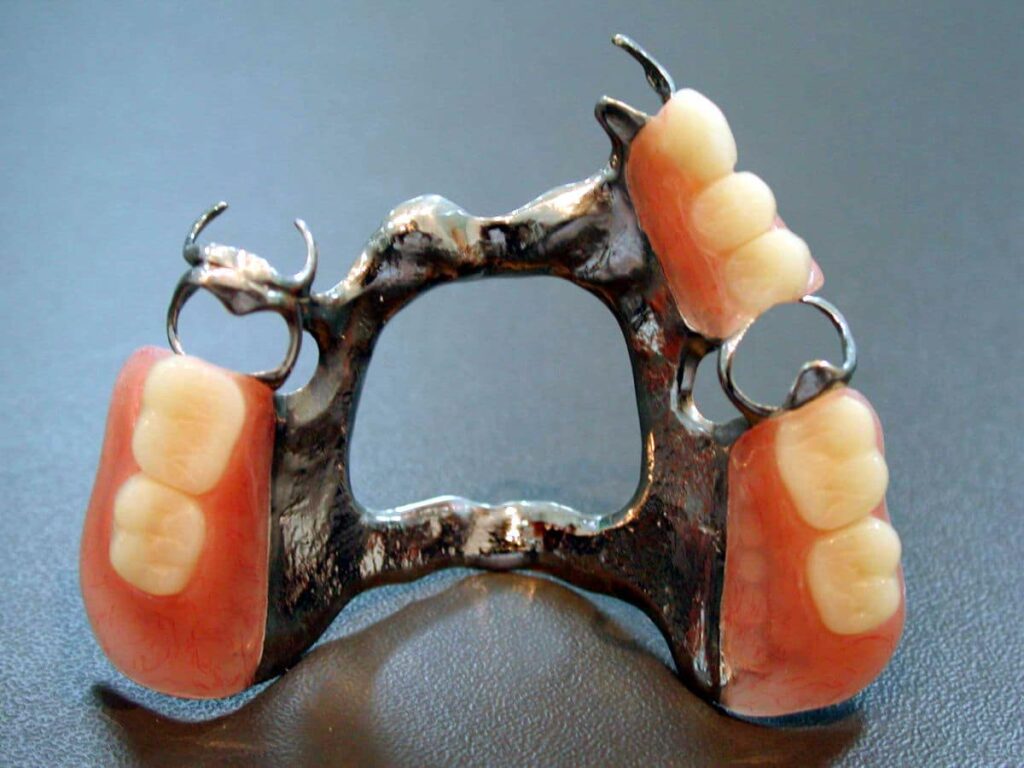
Dentures replace missing teeth with a removable appliance. Complete dentures are a whole set of replacement teeth that replace all teeth in the upper or lower arch and sit on the gums. Learning to use them can be a bit of a challenge, and you may need to make a few adjustments along the way.
Partial dentures replace several missing teeth while you still have some natural teeth, and may use discreet clasps for support. Dentures are often a great option if you’re missing a lot of teeth or if you want to avoid loading up specific remaining teeth. Or if you just need a solution that’s within your budget.
So, How Do You Decide, 6 Questions to Cut Through the Clutter
- How many teeth are you replacing, and where? If it’s just one tooth, a bridge might be the way to go. If it’s multiple gaps, a partial might be better. And if you’re replacing a whole arch, full dentures, or an implant-supported plan might be the way to go.
- Are the teeth next to the gap strong and healthy? Bridges rely on the support teeth (or implants) to keep them in place. If those teeth are in a poor state, your dentist might recommend a different option.
- Do you want a fixed or removable solution? Some people prefer the simplicity of a fixed bridge. Others prefer the flexibility of a removable denture.
- What’s your cleaning routine going to be like? Bridges need to be cleaned under the pontic, while dentures need to come out and be cleaned and looked after.
- What’s your timeline? Ask how many visits you’ll need, how long each step will take, and what happens if you need an adjustment after you’ve left the dentist’s office.
- What’s your long-term plan? Sometimes a bridge or denture is the right choice now, even if implants are a long-term goal. The best plan links today’s choice with what comes next.
Cost, Longevity, and Maintenance, Don’t Choose on Price Alone
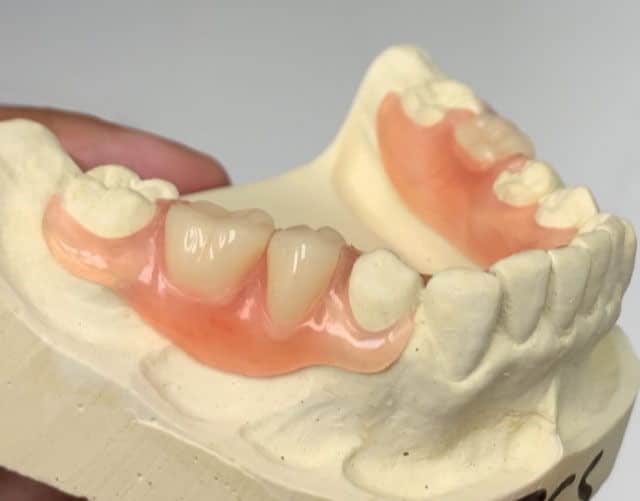
Upfront price isn’t the whole story. Think about two layers: what you pay to start, and what you’ll be maintaining. Dentures may have a lower upfront cost, especially when replacing several teeth. Costs start to add up over time, though. Bridges are more expensive to start with, because they’re fixed, custom-made, and often require some prep work on the teeth you’ll be supporting them with. Over time, there’s a risk that the bridge could fail if the supporting teeth start to rot or get gum disease. Dentures may need re-lining or replacing as your gums and jawbone change shape.
The best thing to ask for is a written-out plan that tells you exactly what’s included right now, what might need doing later, and what might change the price tag (things like materials, extra extractions, gum health, bite issues). Just get an itemised written plan.
Getting Dental Implants or Fixed Bridges at Los Algodones & DSA
If you’re coming from the States or Canada, then getting to your dental appointment is just as important as the dental work itself. Get all the details in writing so you know what to expect. At Dental Solutions Algodones (DSA), we’ll. Start with a free virtual diagnostic, just send us some photos and any recent X-rays, and then you’ll get a rough estimate of costs from us before you book your trip. We’ll make sure to confirm exactly how many visits you’ll need to make, what the estimated timelines are, what materials we’ll be using, what the warranty covers, and how often you’ll need to come back for check-ups.
Los Algodones is a town on the Mexican border that’s basically been built around dental tourism, so loads of people go there for quick, easy visits, and it’s nice and easy to get around. Perfect for brief, focused trips.
Get A Free Quote and Improve Your Oral Health
If you’re deciding between dentures and a bridge, the next thing to do is not guess; just get a written plan first. Ask your dentist to do a free virtual diagnostic and get an itemised estimate. Then get them to explain in their own words why they think this is the best option for you, your mouth, your time scale, and your budget.