
If you’ve ever looked at Invisalign and thought “that’s just clear plastic”, don’t worry, you’re not alone. The trays are just the beginning of a teeth straightening process that starts with a proper diagnosis and wraps up with retention.
But how does Invisalign work in practice? The truth is, it works best when the plan is spot on, and you wear the aligners exactly like you’re told to. And that means being consistent with your treatment plan, even when the tech is top-notch.
What Are Invisalign Aligners and What Do They Actually Do
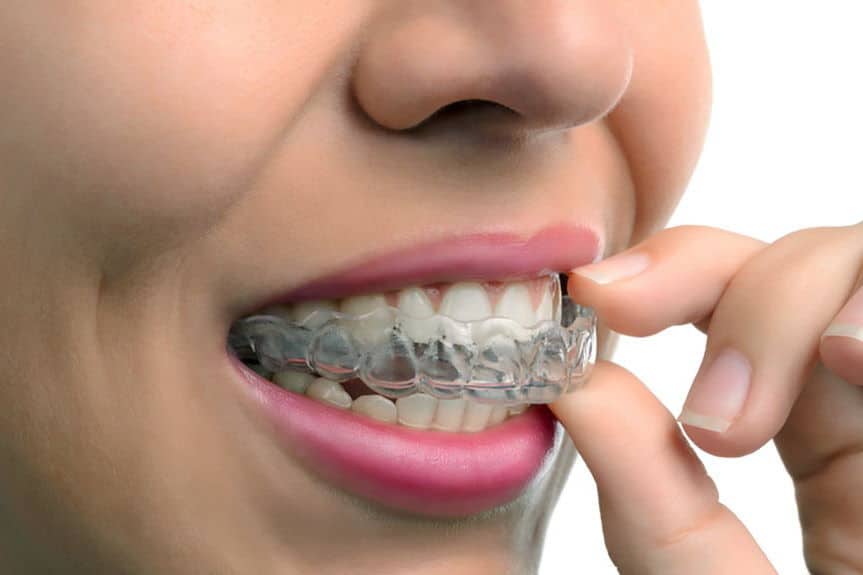
Invisalign is a series of custom, removable, clear plastic aligners that are virtually invisible and straighten teeth into the desired positions. You wear one of the invisible aligners, then the next one, with each new tray making small adjustments to get straight teeth into the desired alignment.
It’s often used to fix crowding, spacing and many other bite issues, but not every smile is a good fit for Invisalign. Gum problems, untreated cavities, and complex bite mechanics can all affect whether it’s safe to use, so your exam is just as important as the actual trays. And your oral health has to come first before you can even start thinking about moving your teeth.
How Invisalign Treatment Works in 5 Easy Steps
This is the simplest way to get the inside scoop on what happens from start to finish.
- The exam plus records (that’s the photos, X-rays and a 3D scan).
- A digital plan maps out each tooth movement (that’s ClinCheck).
- Your custom aligners get made up specifically for that plan.
- You wear the aligners for 20 to 22 hours a day, switching to the next set on schedule.
- You get check-ins and possible refinements and eventually end up with retainers to keep your confident smile on track.
Getting a Customised Treatment Plan, Step By Step
Step 1: Consultation And Getting Your Records
This is the “is Invisalign right for me” visit where your provider has a good look at the health of your teeth, gums and bite and deals with anything that needs sorting out first. Then it’s time for your records, photos, X-rays and usually a 3D scan (or impressions). These records make your plan tailored just to your mouth, not some generic template, and they help your provider see what needs sorting out before you get started.
If you’re thinking of getting treatment abroad, some clinics can review your photos and previous X-rays first and then confirm everything in person. That can give you a good idea whether your case is a good fit before you book anything.
At Dental Solutions Algodones (DSA), we’ve got a top orthodontic treatment specialist in-house, Daniela Fernandez. She’s a qualified dental professional who was recognised as a Top Doctor Platinum by Invisalign in 2021. We also do a Free Virtual Diagnostic and use top-end tech like CAD/CAM and treatment planning software for accurate imaging, so our international patients who are thinking of coming down for a short trip can pre-review their treatment and save some time.
Step 2: Planning It Out With ClinCheck
That’s Invisalign’s digital planning platform: it shows a 3D preview of how your teeth will move. It helps your provider decide on the right sequence of aligners and whether you’ll need any attachments or space-making.
One thing to keep in mind is that this is just a plan, it’s not a guarantee. Teeth move in their own way, and biology can be a bit unpredictable, so your provider may need to adjust the timing or add some refinements as you go along. Keep in mind that you need to have exceptional oral hygiene during the entire process as well.
Step 3: Wearing Those Aligners And Switching Sets
Each aligner applies gentle pressure in just the right spots, and you switch to the next set on the schedule that your provider gives you. The treatment consists of removable trays, so you’ll take the aligners out to eat, drink anything other than water and brush and floss.
Two words to keep in mind are wear time and tracking. Tracking means the aligner is fitting properly and your teeth are on track, and when wear time drops, tracking can slip, and things can get delayed.
Step 4: Check-Ins And Refinements
Check-ins let your provider check how things are going, adjust the plan and troubleshoot any issues early on. They can also help catch any small tracking problems before they become big delays.
Refinements are just extra aligners used for fine-tuning, and they’re pretty common. They’re not a sign that you did anything wrong; they’re just part of making sure everything is perfect.
Step 5: Retainers
That’s where you wear retainers to stop your teeth from drifting back after treatment. Your provider will let you know how often to wear them, but the idea is pretty simple: retention is how you keep your results on track long-term.
How It All Works: The Science Behind Invisalign Clear Aligners
Consistent, Gentle Pressure
Now, here’s the answer to: “How does Invisalign work?” Invisalign aligners work because they apply a steady, controlled force that guides your teeth gradually. Faster is not always better in orthodontics, so movement is staged to respect biology. Gradual movement is the key, even when you want quick results.
It’s normal for a new tray to feel a bit tight; that’s usually its peak in the first day or two. But sharp pain, swelling or a tray that won’t seat at all are things to get in touch with your provider about right away.
Periodontal Ligament and Bone Remodelling
A thin ligament around each tooth helps it move, and the more consistent you are with your aligner wear, the better your body is at remodelling bone. Bone breaks down a tiny bit on one side of the tooth and rebuilds on the other as the tooth shifts. It’s your body doing the heavy lifting once the force is applied correctly.
That being said, gum health does matter, and your provider may have to pause or adjust your plan if there’s any sign of inflammation showing up. Healthy tissues really do make a difference; they help the movement stay safer and more predictable.
The Extras That Make Invisalign Work
SmartTrack Material
Invisalign’s aligners are made with a special material called SmartTrack, and basically what you’re looking for is a secure fit and consistent force delivery from tray to tray, because that’s what helps tracking along.
Attachments
Attachments are small, little shapes that are bonded to certain teeth to help the Invisalign aligners grip and move teeth a bit more precisely. Not everyone needs them, and if you do, you should probably ask where they go and what they’re helping to support.
IPR
IPR stands for interproximal reduction, and it’s a way of creating a bit of space between teeth by polishing very small amounts of enamel. If it is recommended, ask how much space it will create, why it’s needed, and what your alternatives are.
What Invisalign Feels Like Day to Day
Expect some consistent pressure when you switch to a new tray, but that usually fades pretty quickly as your teeth catch up. You might also notice a bit more saliva, or a slight lisp for a day, or maybe some minor irritation at the edges that settles down soon.
Normal experiences typically include a bit of soreness, some pressure, a temporary change in your speech, and a bit of irritation that improves with time. If you’ve got any of the following, though, give your clinic a call: swelling, bleeding that won’t stop, severe pain, a tray that’s cracked, or an aligner that won’t fit.
How Long Does Invisalign Take and What Affects The Timeline
Timelines can vary from person to person because teeth move in a pretty organic way. Your doctor sets the pace based on your bite, the movements you need to do, and how well each aligner fits as you go.
Wear time is really the biggest factor you have control over. Invisalign usually advises 20-22 hours per day for best results, which leaves a few hours for meals and cleaning, and missing hours can slow down the treatment process.
Things that usually affect the timing include how complex your case is, how well the Invisalign aligners are tracking, and any refinements that might be needed. Rotations and bite changes can take a bit longer. If one of your teeth is lagging, you might need to do some tweaks, and finishing aligners are pretty common for the really fine details.
Invisalign vs Traditional Metal Braces vs Mail-In Aligners: How to Choose?
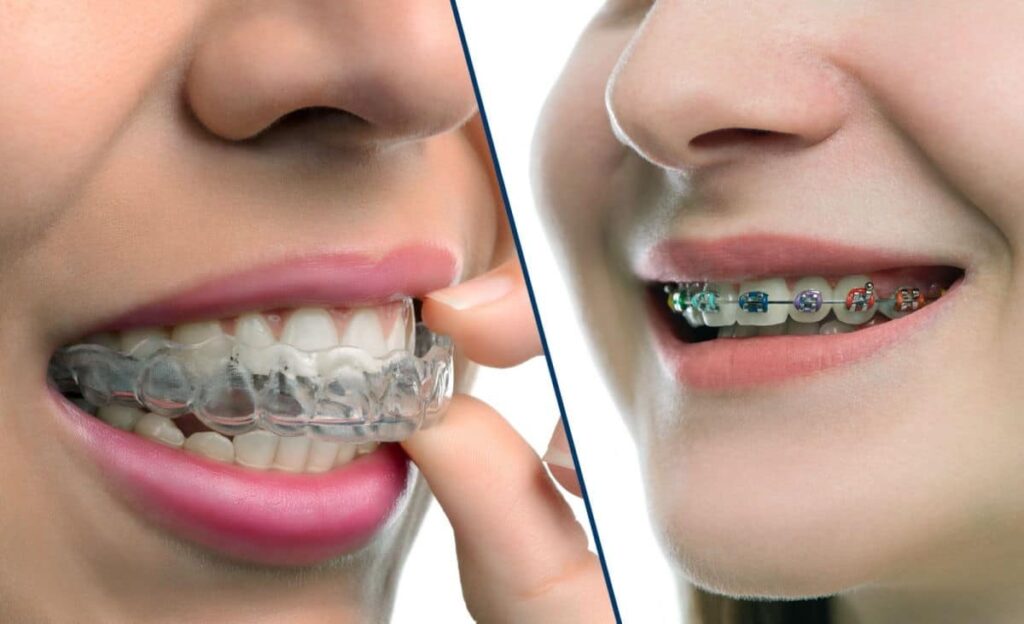
First and foremost, think about what you need done. Cosmetic straightening is a bit different from bite correction; the safest path is usually the one that starts with an exam and stays supervised.
Invisalign with a provider is a good fit when you want clear aligners with full diagnostics and ongoing supervision. Success depends on your wear time and check-ins, and the plan can be refined if your teeth need it.
Traditional braces are a good choice if the case is complex or needs a bit of firm bite control. Metal brackets are a bit more visible and need a bit more cleaning effort, but they can be really powerful for certain movements.
Mail-in aligners may suit really minor changes if you understand the limits and are okay with less in-person oversight. They usually don’t offer as many tools for tougher movements and fewer opportunities for clinical adjustments.
Keeping your Custom Aligners Clear and Your Teeth away from Dental Issues
A few small habits really do make Invisalign feel easy rather than annoying. Simple routines help you avoid stains, odours, and cavity risk.
Rince your trays with cool water when you take them out and brush and floss before the next trays go back in. No hot water, though, that can warp the aligners, and use the case so you don’t lose them in your napkins. Clean before you reseat to make sure you’re not trapping food.
If you’re travelling, pack a mini kit with a case, travel toothbrush, floss, and a backup cleaning option for on the go. A small kit really does prevent the most common “I forgot” problems.
The Invisalign Process in Los Algodones With DSA: Remote Start, Travel Logistics, and Smart Savings
If you’re in the U.S. or Canada, you can usually start planning before you book the trip. DSA offers a Free Virtual Diagnostic so you can share photos, goals, and any recent records you already have and get a clearer idea of next steps.
To make the review more useful, be sure to include your top concern, like crowding, spacing, bite, or “just the front teeth”, plus clear photos from the front and both sides.
Orthodontic treatments are pretty detail-heavy, so clear communication really does matter. At DSA, we have bilingual staff, so our international patients can fully trust every detail of their dental health with us. We can also offer additional help for dental travellers, including arranging a free shuttle from the border and can host you at one of our partner hotels starting at $80 a night.
How much does Invisalign cost?
The cost of Invisalign is all over the place, depending on just how tangled things are inside your mouth and how many different trays you need to straighten everything out. But here’s the thing: if you’re looking to get Invisalign outside of the States or Canada, you can usually save some serious cash, up to 27% in some cases. For example, in the US it’s running around $5500, but over here at DSA it’s as low as $3999, that’s a nice bit of savings in anyone’s book. And the best part is, you still get top-notch clear aligner therapy that’s customised to your exact needs.
If you’d like to use your dental insurance, we will be glad to help you fill out any reimbursement form at our office so everything sails smoothly.
You’ve Got Nothing to Lose
If you’re thinking about getting Invisalign or conventional braces in Los Algodones and are still on the fence, then just take it easy and start with a free consultation with us, that way you can get a sense of whether or not Invisalign is the right choice for you. And while you’re at it, ask for a written estimate of what’s going to cost you; it’ll make comparing prices a whole lot less painful. Get that plan in writing before you even start looking at flights, okay?