
If you experience chronic jaw pain that just isn’t budging despite trying out the usual suspects, like night guards and pain medications, then it’s probably time to consider red light therapy for TMJ. This non-invasive, totally pain-free treatment uses red and near-infrared light to reduce inflammation and ease up on those tense jaw muscles. And the best bit? It works to support tissue repair around the jaw joint (where the lower jaw connects to the skull in front of the ears).
- Red and near-infrared light seem to give a bit of a boost to cellular activity, blood flow, and tissue repair around the TMJ.
- With regular sessions, you might find that chronic pain, headaches, muscle tension, and trouble chewing start to ease off a bit.
- Just to be clear, red light therapy is usually used as a bit of a back-up to things like night guards, physical therapy, and stress management, rather than as a replacement.
- Side effects are pretty minimal when you’re using it right, but make sure to talk to a dentist or doc before chucking a home device on your TMJ.
Understanding TMJ Pain and Why It’s So Hard to Treat
The temporomandibular joints (TMJs) are the joints that connect the lower jaw to the skull right in front of your ears. And when they get messed up, which is what happens in a TMJ disorder (or TMD for short), it can cause some real problems. Symptoms can range from a bit of a twinge to full-on chronic jaw pain.
Some of the most common TMJ symptoms include:
- Pain or tenderness when you’re trying to chew or talk
- Clicking or popping when you move your jaw
- Waking up with a stiff jaw or trouble opening your mouth
- And the usual assorted bonus of headaches, ear pain, and facial tension
The usual suspects that can cause TMJ pain to become a regular visitor to your life include things like teeth grinding (also known as bruxism), chronic stress and clenching, arthritis, a wonky bite, jaw trauma, and being a bit of a gum-chewing fanatic. TMJ disorders can affect the muscles, the joint, or a bit of both.
TMJ dysfunction tends to turn into a chronic problem when there’s a cycle of pain, inflammation, tight jaw muscles, and stress going on. Standard TMJ treatment often involves night guards, physical therapy, anti-inflammatory meds, Botox, steroid shots, and (in very rare cases) surgery.
But red light therapy for TMJ is starting to get a lot of attention, because it might be able to address pain and inflammation at the cellular level, even if it can’t fix the underlying cause of your TMD.

What Is Red Light Therapy and How Does It Work in the Jaw?
Red light therapy, or photobiomodulation (PBM) or low-level laser therapy (LLLT) if you want to get all fancy, uses red and near-infrared light to sort of nudge cellular function and healing in the right direction.
Red Light Therapy addresses the TMJ disorder as a non-invasive treatment option.
- Therapeutic wavelengths: red light mostly targets the surface stuff, while near-infrared light penetrates deep into the muscles and joint capsule.
- Cellular effects: the light gets absorbed by those little powerhouses called mitochondria, which helps to boost ATP production, cellular repair, circulation, and inflammation control.
- Blood flow: improved microcirculation and lymphatic drainage can help clear out some of that swelling and inflammation that’s building up around the TMJ.
- Non-thermal treatment: at the right dosages, red light therapy won’t burn or damage any tissue; it’ll just feel like a bit of gentle warmth.
- Research: Red light therapy has been getting studied for ages for things like wound healing and musculoskeletal pain, and there’s also some research going on about its effects on TMD and TMJ pain.
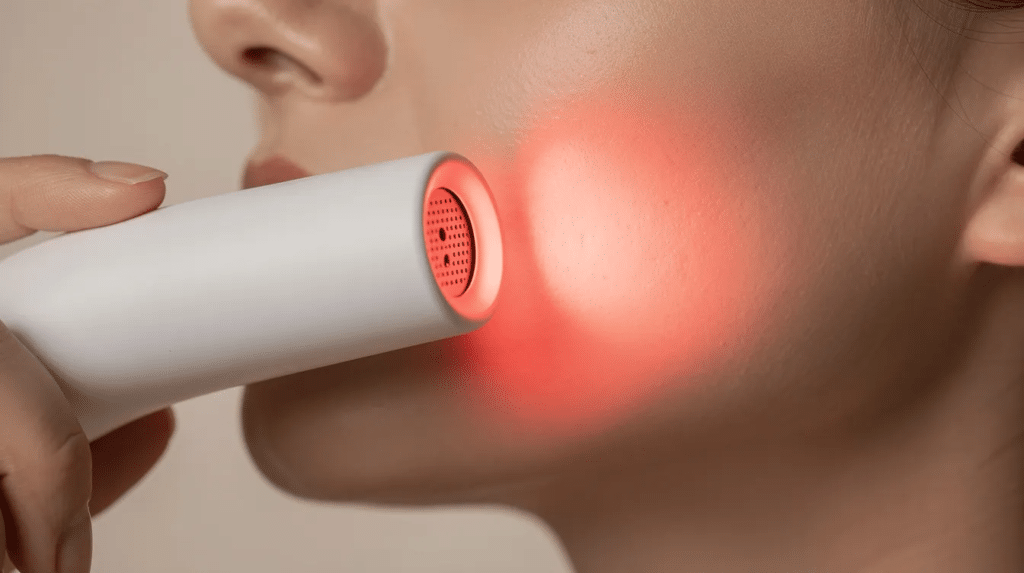
Red Light Therapy for TMJ: Benefits, What to Expect, and How to Use It
So red light therapy offers relief for even severe TMJ pain and might be able to help out with things like reducing muscle and joint discomfort, relaxing those tight jaw muscles, and supporting some tissue repair. And the best part? It’s a needle-free, non-invasive treatment that doesn’t require any anaesthesia or downtime.
Some of the potential benefits of using red light therapy for TMJ pain include:
- Less TMJ dysfunction and facial tenderness
- Less jaw and neck muscle tightness and clenching
- Improved jaw mobility
- Fewer headaches that are caused by jaw tension
- More comfortable chewing, talking, and yawning
In-office treatment
A clinician will generally just pop a red or near-infrared light device over each side of your jaw for a few minutes at a time. Treatment plans usually involve multiple sessions per week for a few weeks.
Home treatment
Many patients probably will be applying a wearable jaw pad or small light panel over the TMJ area, following the manufacturer’s instructions. Session length and frequency will depend on the device.
What results can you expect?
You might start to notice a bit of relaxation after a few sessions, but it’s usually going to take a few weeks of consistent treatment for you to really start to see some meaningful improvement. Results will vary depending on the severity and cause of your TMJ pain, whether or not you’re still grinding your teeth, and whether or not you’re using red light therapy alongside other TMJ treatments.
And one of the big bonuses of using red light therapy for TMJ dysfunction? No needles, no anaesthesia, and no downtime, which makes it a pretty appealing option for pain management.
Safety, Side Effects, and How to Use Red Light Therapy for TMJ Responsibly
Red light therapy for TMJ pain is generally considered safe as long as you’re using it according to the recommended settings, but it’s still worth treating it like a medical therapy rather than a bit of a cosmetic treatment. Potential side effects might include a temporary sense of warmth or redness on the skin, a bit of soreness, or the odd headache. To use red light therapy safely, you should:
- Never try to shine the intense light right into your eyes without a proper barrier.
- When treating areas around your temples or cheekbones, be sure to use some decent eye protection.
- Steer clear of giving red light therapy to areas that are broken out or infected, or if you have any known skin cancers.
- Get a doctor’s okay if you’re pregnant or have any issues with your skin that make it super sensitive to light.
- Start with shorter sessions and keep an eye on the recommended distance, strength, and time that the device suggests.
- If you’re one of the unlucky ones with a TMJ disorder, you still need to consult with a dentist, a specialist in jaw problems, or a physical therapist to find out what’s going on and whether red light therapy is worth a shot.
Home devices for red light therapy can’t possibly replace the advice and treatment from a real doctor for a TMJ disorder; that’s what is meant by standard TMJ treatment.
Integrating Red Light Therapy into a Complete TMJ Relief Plan
Because a lot of the time TMJ disorders are caused by a combination of factors, trying to tackle them with red light therapy alone may not be enough, so you might find it’s more effective if you combine it with other evidence-based treatments and a few changes to your lifestyle.
- Night guards & dental appliances: A custom night guard can help stop you grinding your teeth as much, and red light therapy can help calm down any irritated muscles and joints
- Physical therapy & jaw movement and stretches: Gentle exercises to loosen up your muscles and improve your posture can be a big help.
- Stress management: Things like meditation, deep breathing, and other relaxation techniques can help you stop clenching your jaw and feeling stressed all the time.
- Lifestyle changes: Try to cut back on eating super chewy foods, give up the habit of chewing your nails, take care of your posture, and make sure you’re getting good restorative sleep.
- Track your progress: Check in on your jaw pain, headaches, how wide you can open your mouth, and all that sort of thing, over a few weeks to see if your treatment plan is actually working.
If you’re stuck with chronic TMJ pain and nothing else seems to be doing the trick, get in touch with a dentist or doctor who knows what they’re talking about and ask if red light therapy is something they reckon could be useful.
FAQ
How often should I use red light therapy for TMJ pain?
2–3 times per week in-office, or once daily/every other day at home, adjusting based on response and professional guidance.
Can red light therapy completely cure my TMJ disorder?
No, it manages pain and inflammation but doesn’t cure TMJ, which has multiple causes.
Is it safe to use red light therapy for TMJ at home instead of going to a clinic?
Yes, if devices are used correctly, but professional oversight ensures proper dosing and placement.
How soon will I notice improvements in my jaw pain?
Relief may come within a few sessions, but many need 3–4 weeks of consistent use.
Can I combine red light therapy with medications or injections to treat TMJ?
es, often used alongside medications or injections, but combinations should be coordinated with a clinician.