
Most dentists advise against sleeping with dentures on a regular basis, and for good reason. If your dentures are left in your mouth overnight, they can cause more harm than good. Your gums and jawbone need time to rest, and removing dentures at night can help to reduce the risk of infections such as denture stomatitis and gum disease.
The main exception to this rule is immediate dentures following a tooth extraction. Your dentist may recommend that these be worn continuously for the first couple of days after the extraction.
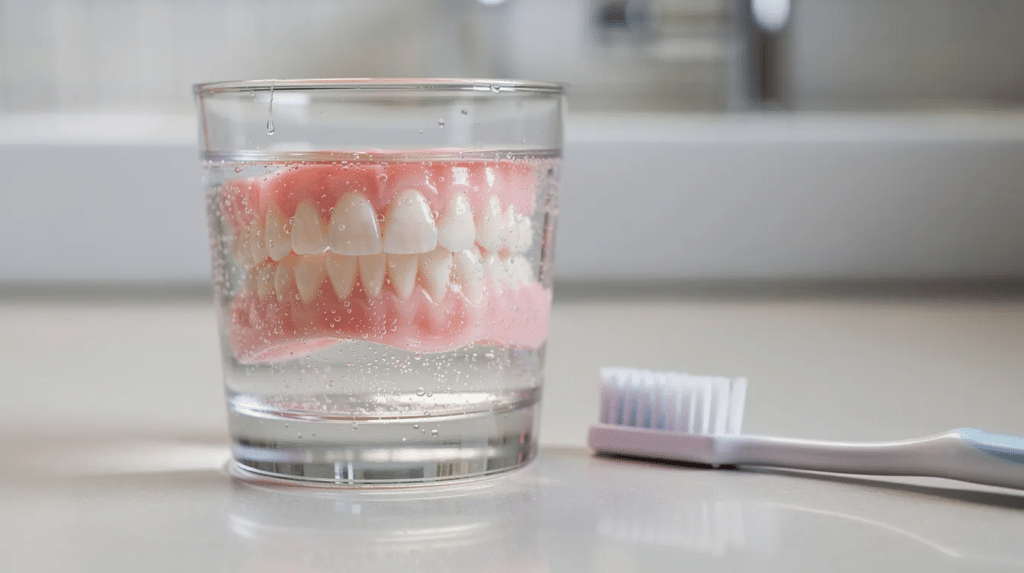
So, Can You Sleep With Your Dentures In or Not?
Yes, you can sleep with your dentures in, but most dentists would still advise you not to.
Continuous wear of dentures causes a lot of stress on your gums and jawbone, which can lead to problems with your overall health.
The simple answer to this question is: no, you should remove your dentures every night.
This applies to all types of dentures, including full dentures and partial dentures. Giving your gums and jawbone a good 6-8 hour break each night can really make a big difference to your oral health.
If you do occasionally find yourself in a situation where you need to wear your dentures through the night, and you’re generally in good health, it’s unlikely to cause any lasting harm. But if you’re doing this regularly, it can start to cause problems with oral infections, gum inflammation, and even bone resorption.
These risks apply to upper dentures, lower dentures, and removable partial dentures equally, and are because constant pressure on the tissues and biofilm can build up and cause problems if the dentures are not removed regularly.
The sections below explain the medical reasons behind this advice, the rare exceptions, and provide some step-by-step night-time denture care tips to help you keep your dentures and your mouth in good health.
Understanding Dentures and How They Affect Oral Health
Dentures are removable prosthetic devices that are designed to replace missing teeth and support facial structure. It’s worth understanding a bit about them and how they work in order to see why taking them out at night is so important.
The main types of denture are:
- Full dentures for people who have lost all their teeth in an arch
- Partial dentures that are fitted around the remaining natural teeth, using clips or precision attachments
- Immediate dentures, which are fitted straight away after an extraction
Dentures come in a variety of materials, including acrylic resin bases and metal frameworks. Traditional dentures rest on the gums and jawbone, distributing chewing pressure across soft tissue rather than tooth roots.
When dentures are worn, they place pressure on gum tissue and the alveolar bone. If this pressure is constant, day and night, it can accelerate bone resorption, changing the shape of your jaw, altering denture fit, and even affecting facial appearance. Dentures can also trap food particles and bacteria against the gums.
For patients seeking more stability, dental‑implant supported dentures provide an alternative. By anchoring dentures to dental implants, chewing forces are transferred through the implants into the jawbone, helping preserve bone structure, improve fit, and reduce many of the long‑term complications associated with traditional dentures.
Well-fitted and properly maintained dentures can be a great way to support your long-term oral health, but misuse, particularly wearing them every night, can undermine all the benefits and even shorten the average lifespan of a set of dentures.
Why Denture Wearers Should Remove Dentures at Night
If you sleep with your dentures in every night, it can increase your risk of a number of serious oral health complications. Continuous wear can cause gum irritation and infections that may go unnoticed until the damage has already been done.
Gum Irritation and Denture Stomatitis
Continuous wear causes a warm, moist, low-oxygen environment under the denture, which leads to sore gums, inflammation, and redness. Eventually, this can develop into denture stomatitis, a chronic inflammatory condition that affects the oral tissues.
Fungal and Bacterial Infections
Fungi like Candida and harmful bacteria thrive under dentures at night, leading to thrush, bad breath, and painful sore spots. Because saliva production decreases during sleep, the mouth’s natural defences against infection are weakened.
Pneumonia Risk
Research published in the Journal of Dental Research found that elderly individuals who wear their dentures to bed have a higher risk of pneumonia, with a hazard ratio of approximately 2.38 over a three-year follow-up. This is because bacteria buildup on dentures can be aspirated into the lungs during sleep.
A separate study by the University of Rochester found that pneumonia incidence among denture wearers over 65 was a staggering 1,191 per 100,000 compared with 128 per 100,000 in non-wearers.
Bone Loss and Fit Deterioration
Continuous denture wear can also cause bone resorption, which leads to loose, ill-fitting dentures and all the problems that come with it. Over time, this can compound into more and more serious problems.
Systemic Effects
Chronic inflammation and poor oral hygiene from wearing dentures to sleep can even exacerbate health problems such as diabetes and cardiovascular disease, which is particularly worrying for people who are already medically fragile. Removing dentures at night is a simple way to reduce the risk of all these problems.

When Might It Be Okay to Sleep in Your Dentures?
There are only a few very specific situations in which it’s acceptable to sleep in dentures, and all of them have to be approved by a dental professional.
The main exception is with immediate dentures after you’ve had teeth extracted. For the first 24 to 48 hours, your dentist might recommend keeping them in to help the denture settle and reduce bleeding and swelling. But once the initial shock has worn off, you should generally take them out at night.
Some people feel uncomfortable without teeth around loved ones or carers, and occasionally sleeping in dentures might be okay if it helps. Just be sure to discuss this with your dentist first; it’s not just about giving you some peace of mind, after all.
Whatever the reason you might be sleeping in dentures, you need to be as fastidious about cleaning and maintenance as you would be if you were just putting them in and taking them out every day. Remember, “okay sometimes” is a far cry from “healthy every night”.
The Benefits of Removing Dentures at Night
Taking dentures out before bed is one of the single best things you can do to keep your mouth and dentures in top shape.
Removing them at night helps to get gum health and circulation flowing again; your gums get to rest, sore spots have a chance to heal, and blood flow improves. This all adds up to less redness, swelling, and pain, and a lower risk of denture stomatitis.
With your dentures out, you can brush your gums, tongue, and teeth properly, which helps to get rid of plaque and keep your breath fresh. It also makes a big difference for your jawbone; by not having to support a bulky appliance all night, you reduce pressure and the risk of bone loss and warping. Many people find they sleep a lot more comfortably without dentures in.
By reducing the risk of infection and chronic inflammation, removing dentures at night is a key part of healthy ageing, and it can even help to save lives. One study found that people in long-term care who had better oral hygiene had a 60% lower risk of dying from pneumonia.
Removing your dentures at night is simply a normal part of taking care of yourself, not a sign of failure.
The Best Practices for Night-Time Denture Care
Having a regular routine is key to keeping your mouth and dentures healthy, and that includes taking them out, cleaning them, soaking them and looking after your mouth.
Removing Your Dentures Safely
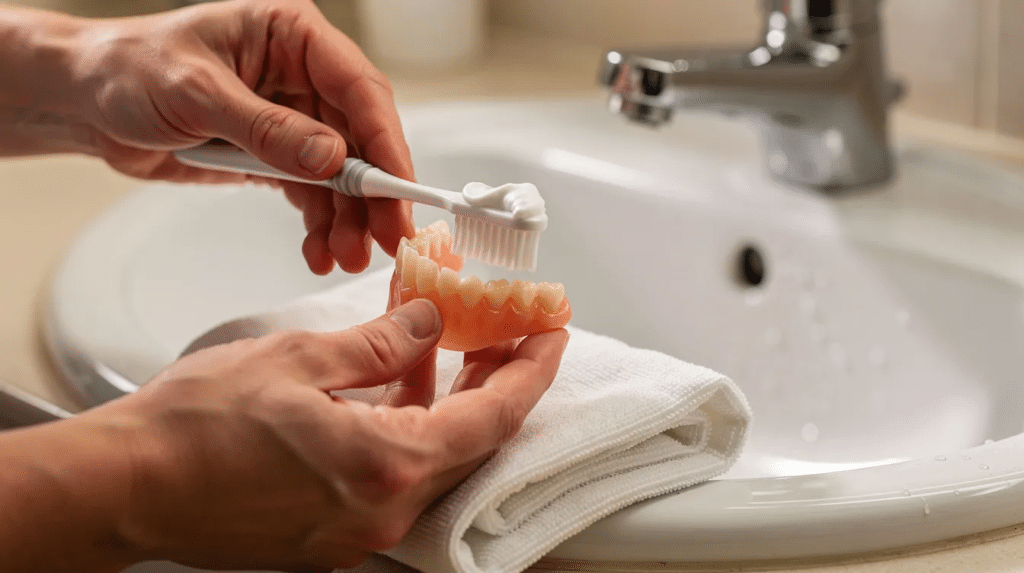
First, fill your sink with water, or put a towel down in case they slip. If you use a denture adhesive, give it a quick soak in some warm water to loosen it up before you take them out.
Cleaning Your Dentures
Use a soft toothbrush and some non-abrasive denture cleaner to get all the plaque, food bits, and adhesive off, but avoid using your regular toothpaste, as that can scratch the acrylic. Get them nice and clean, then rinse them thoroughly.
Soaking Dentures Overnight
Pop them in some room-temperature water, or a denture cleaning solution; just make sure not to use hot water, or you’ll warp the acrylic. Leaving dentures in a denture cleanser solution will help them stay moist and keep their shape.
Looking After Your Mouth
Take a soft brush and some fluoride toothpaste and give your gums, tongue, cheeks and palate a good brush. Don’t forget to clean again before putting your dentures back in in the morning.
Regular Check-Ups
Get to your dentist at least once a year to make sure your dentures are still fitting right, your gums are healthy, and your jawbone is OK. You might need to get a reline or some adjustments to keep things comfortable.
Using Denture Adhesive and Its Role at Night
Denture adhesive can be a big help during the day; it can give you a bit more confidence, support your dentures, and help with eating and speaking. But it’s not a substitute for getting your dentures properly fitted or for taking them out at night. If you do need to use an adhesive, use the tiniest amount you can get away with; too much can make it difficult to clean and raises the risk of oral health problems.
Apply a thin layer to clean, dry dentures in the morning, following the instructions. Don’t overdo it or you’ll be fighting a losing battle. Overnight, give them a good rinse with some warm water and brush off any adhesive that might have stuck to your gums. If you leave it on, you’ll struggle to clean it off in the morning, and overuse of zinc-based adhesives has even been linked to health problems.
FAQ
3Is it ever safe to wear dentures 24/7?
Only briefly after extractions under dentist’s orders. Long‑term 24/7 wear is unsafe: tissues need rest. Aim for 6–8 denture‑free hours daily.
What if my dentures hurt when I take them out at night?
Mild soreness is normal, but persistent pain or ulcers need a dentist. Keep removing dentures nightly; adjustments relieve tight spots.
Can sleeping with dentures cause bad breath?
Yes: plaque and bacterial buildup can cause odor and tooth decay on your remaining natural teeth. Removing, cleaning, and brushing gums before bed prevents it. Persistent odor may signal infection or poor fit.
How often should I replace my dentures if I take them out every night?
Dentures last 5–7 years with good care. Night removal helps longevity. Annual check‑ups guide when relines or replacements are needed.
What should I do if I fall asleep with my dentures in by accident?
One night isn’t serious. Remove, clean, and brush gums promptly. Watch for soreness or redness; see a dentist if issues persist or it happens often.