
If you are on the hunt for different types of dentures, chances are you are trying to figure out which ones will fit seamlessly into your day-to-day life, ones that will look and feel like your own teeth. The thing is, dentures are not a one-size-fits-all solution, and the right choice will depend on a few key factors: how many teeth you are looking to replace, how quickly you need teeth in place, and how much stability you are after.
Things get a lot clearer when you stop thinking about brand names and start thinking in terms of categories: full vs partial dentures, removable vs fixed, and temporary vs final, well, with this guide we’ll help you get a clear image between all different types of dentures so you can think of them in simple, basic categories and the options will start to resonate to your personal preferences pretty quickly.
What Dentures Are All About
Dentures are basically custom-made tooth replacements that help restore your confidence when you lose teeth. Some of them replace all the teeth on one arch (upper or lower), while others fill in gaps when you still have healthy natural teeth. Function and that all-important confidence are key for most people.
What makes dentures feel secure comes down to one thing: support. Regular removable dentures sit on your gums and the bone ridge underneath, often with a bit of adhesive to give them an extra grip. But dental implants can add a really useful anchor that helps improve stability for eating and speaking.
Your mouth changes over time, too, after extractions, gums and bone can shrink, which is why plenty of people end up needing adjustments, relines, or even replacements. Getting the fit just right is a bit of a maintenance thing
Different types of dentures at a glance
| Type | Best for | Removable at home? | Stability | Typical timeline |
| Complete (full) | Replacing all teeth on an arch | Yes | Moderate | After healing or as a final set |
| Partial dentures | Replacing some teeth | Yes | Moderate | After evaluation and design |
| Immediate (temporary) | Teeth the same day as extractions | Yes | Moderate early on | Same day, then refit later |
| Implant-retained (snap-in) | More stability, still removable | Yes | High | After implants heal |
| Implant-supported (fixed/hybrid) | Maximum stability, fixed full-arch | No | Very high | After healing + final prosthetic |
| All-on-4 (fixed concept) | Fixed full-arch using a specific plan | No | Very high | Case-dependent planning |
Complete Dentures
Full dentures (Also known as traditional dentures) replace all the teeth on one arch, or both. They’re a good option when teeth are missing, badly damaged or just not reliable anymore. For many people, a clean slate made of artificial teeth helps them get their confidence back.
A good fit should feel stable without being at all painful. You might notice a gentle pressure, but that’s it. There is a learning curve with speech and eating, and some people find that lower dentures are a bit trickier because they tend to have less suction than the upper ones.
It’s not so much about the materials as the process. Most full dentures use an acrylic base with denture teeth made from acrylic or porcelain-like materials, but it’s really the impressions, bite records and try-in that decide how comfortable they are going to be. The right fit is way more important than fancy materials.
Partial and Flexible Dentures
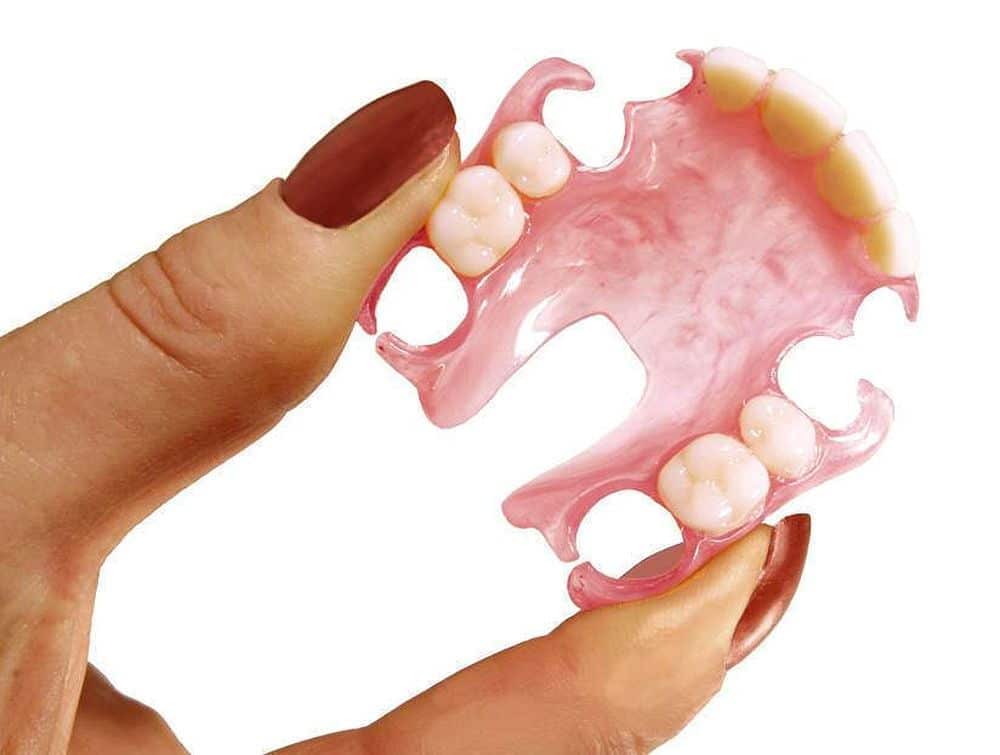
Partial dentures are for people who still have some natural teeth to fall back on. They replace missing teeth while using the remaining ones for support and positioning. When designed well, they also help protect your remaining teeth.
Compared to traditional dentures, a bridge is fixed and relies on neighbouring teeth. Candidacy is a pretty big consideration for an implant. Dental implants replace a tooth root with a post in the bone. The right choice really depends on your bite, tooth health, budget and timeline.
Common partial denture categories include acrylic (often a transitional option), metal framework (thin and durable if it’s designed right), and flexible (comfortable for some people, a bit harder to adjust for others). In partial dentures, how it’s designed has a lot more to do with durability than the label itself.
Before you commit, ask questions that will help you make sure you’re getting the best outcome possible. Start by asking for a written treatment plan and understanding the follow-up schedule.
- What effect will this have on my bite and the remaining teeth?
- Where will the clasps sit, and will they show when I smile?
- Can it be modified if I lose another tooth later?
- What adjustments or relines can I expect in the first year?
- What cleaning routine fits the materials I have?
Temporary and Immediate Dentures (Transitional, Immediate, “Flippers”)
Immediate dentures are made in advance and put in right after extractions, so you don’t have to go without teeth during the healing process. Transitional dentures and “flippers” are all about providing coverage and function while your gums settle, but they’re definitely not the final product.
As you heal, your gum shape can change pretty quickly, which is why a snug fit on day one can loosen up fast. Expect to need follow-ups for sore spots and fit tweaks, and a reline or a new final denture once your healing has stabilized.
Dental Implant-Retained Dentures (Snap-in) and Overdentures
A “snap-in” denture is removable at home, but it clips onto dental implants through attachments, so you click it in and out for cleaning. The appeal is simple: more stability without going fully fixed. More secure, still removable, it’s a good middle ground.
These can be a strong option if you want better support for eating and speaking, and you like the idea of being able to remove the denture to clean it. The tradeoffs are that you need to heal time to deal with the implants, and you may need to replace the attachments over time. Attachments can wear down and need replacing.
Implant-Supported Fixed Dentures (Hybrid dentures) and All-On-4
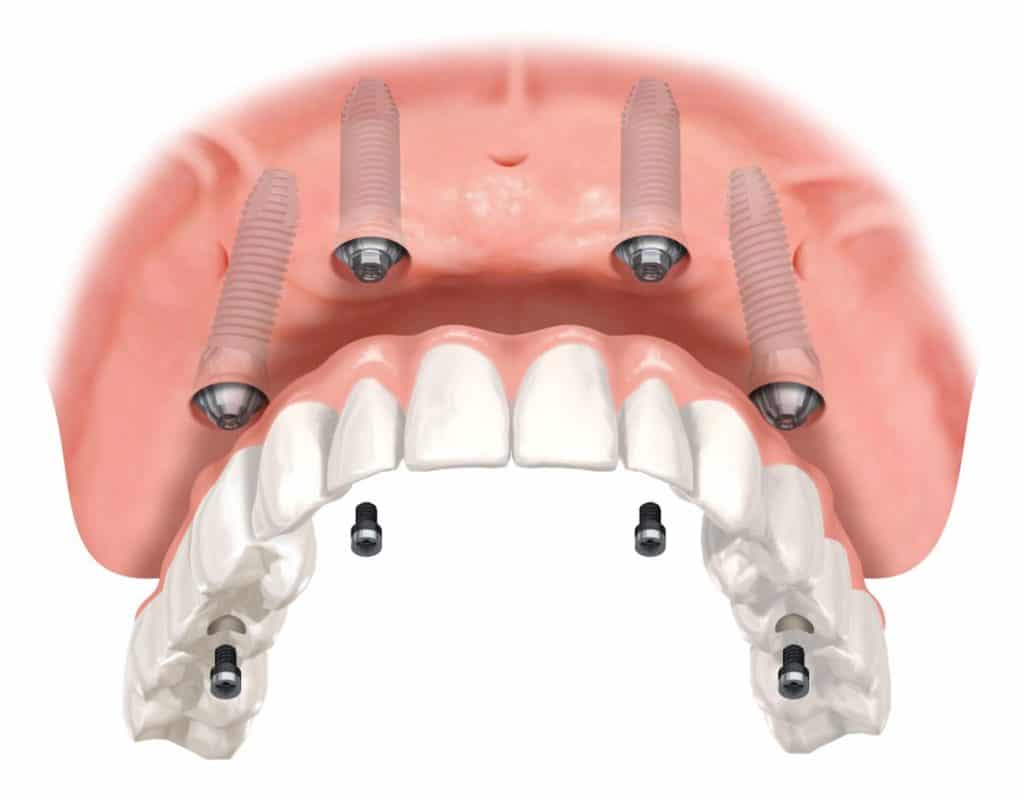
Implant-retained usually means removable at home, but stabilized by dental implants. Implant-supported fixed options are secured to implants and only removed by a dental professional for maintenance or repair. In daily life, fixed dentures feel much closer to your natural teeth.All-On-4 is a specific, fixed full-arch concept that uses a set number of implants in strategic spots to support a full-arch prosthesis, but will it actually work for you? That really depends on your personal circumstances. Your anatomy, bite, and health history are all factors that play a role here. When it comes to full-arch cases, planning is literally everything.
Choosing the right kind of denture
If all these options are starting to feel overwhelming, don’t worry, let’s start with some simple questions. Asking yourself just a few questions can really help to narrow down your choices and make the conversation more manageable.
- How many teeth are you going to need to replace, and which part of your mouth (upper, lower or both are we talking about?
- Do you want to be able to take your dentures out at home, or do you want something that’s going to stay firmly in place all the time?
- Do you need to have new teeth right after you’ve had your teeth taken out?
- How much time and effort are you prepared to put into maintaining your dentures on a daily basis?
- What does ‘success’ mean for you in terms of your dentures? Is it comfort, how they look, how well you can chew or all of the above?
Comfort level usually comes down to having clear expectations and following through on a plan. A thorough examination, accurate bite records, some time to make any necessary adjustments, and a long-term plan for re-lining or taking care of any attachments tend to make all the difference for people.
Why Los Algodones is a popular denture destination
For people from the U.S. and Canada who are looking to get dental work done down in Mexico, Los Algodones is often one of the go-to destinations because of how convenient and easy it is to get to, especially if you’re just looking for a quick in-and-out treatment trip.
Cancun, on the other hand, is often paired with resort travel; people go there to relax and unwind while they get their dental work done. Los Algodones is more of a clinic-centred destination, though you can just walk from one appointment to the next. If your priority is getting the best value for your money and being able to schedule your appointments without any fuss, then that difference really does matter.
At DSA, we’re a family-run dental office run by very experienced and qualified dental professionals. Between us, we have heaps of international qualifications and a combined 20+ years of experience working with all-on-4 and all kinds of dentures based on our patients’ needs. As a bonus, we like to offer a few extras to make our international clients feel at home: we can do virtual diagnostics, we’ll pick you up from the airport and take you to your hotel, and we can even help you arrange a place to stay for as little as $80 a night.
What a denture consultation and treatment plan usually involves
Getting a good denture plan usually starts with making sure you and I are both on the same page, which means talking about your goals. Then, we’ll move on to the clinical side of things, getting a good look at your gums and teeth, and using imaging as needed to make sure we have a clear picture of your situation. For implant cases, we need to take a step back and have a really good look at your bone and the forces at play when you bite; imaging really does guide those implant decisions.
From there, you should get a written treatment plan that outlines all the options available to you, the timeline, the costs, and what you need to do to take proper care of your dentures in the long run. It’s always good to ask questions, like what happens if you need to make an office visit for any adjustments, what happens if something breaks or requires adjustments, and what long-term maintenance is going to mean for you. In treatment planning, trust is everything; that means being upfront and transparent about what’s going to happen.
FAQ
Snap-in vs permanent dentures, what’s the difference?
Snap-in dentures are removable at home and attach to implants with little connectors. Fixed implant-supported dentures, on the other hand, are fixed permanently in place and tend to be removed only by a dental professional.
How long do dentures last?
Many people get years out of their dentures, but the fit will change over time as your gums and bone shift. Getting re-lined and replacing them from time to time can help keep things comfortable and functional for you.
How do I clean my dentures safely?
Use a soft-bristled brush and a non-abrasive cleanser, avoid hot water, and follow any specific guidance for your implant attachments, if you have them. For most people, gentle daily cleaning is key.
Get a clear idea of your denture options.
If you want help narrowing down the right kind of denture for your smile, at DSA, we can start with a Free Virtual Diagnostic, then confirm the final plan after an in-person exam in Los Algodones. When implants or a fixed full-arch option are on the table, it is essential that we go over your own personalized plan. We’ll be happy to assist you with shuttle services to our clinic and help you get lodging for $80 per night.