
Let’s say you just decided to restore your smile and got new dentures, but now you’re worried about bad breath; well, you’re not alone. The truth is, it’s not the dentures themselves that smell; dentures don’t have a natural stench. However, when bacteria, food particles, plaque, or dry mouth create a perfect storm that allows odor-causing compounds to build up, that’s when the problem starts to develop.
All sorts of factors can contribute to denture-related bad breath, poor denture hygiene, wearing dentures at night, dry mouth, a bad fit, and oral health problems, to name a few. But the good news is that there are plenty of ways to prevent most denture-related bad breath: you need to practice good oral hygiene, stick to a consistent cleaning routine, stay hydrated, and get regular dental checkups.
So, At the End of the Day, Do Dentures Cause Bad Breath or Not?
Now, the short answer is yes, dentures can definitely contribute to bad breath. But it’s not because of the dentures themselves. Most dentures are made from polymethyl methacrylate (PMMA), which doesn’t have an inherent smell. Where the problems start is when plaque, bacteria, and food debris accumulate on or underneath the denture.
Oral bacteria are the culprits here, breaking down proteins from food and saliva and releasing volatile sulfur compounds (VSCs) that produce these unpleasant smells. And dentures give bacteria a place to call home, surfaces and small spaces where the bacteria can build up into a biofilm, so while dentures themselves aren’t the problem, how we wear and maintain them plays a big role.

Main Reasons Dentures Smell Bad and Cause Bad Breath
Food Gets Trapped
Food can get stuck under full dentures, between artificial teeth, or around partial denture clasps. And when it does, bacteria start to break it down, producing unpleasant odors, especially if the particles stay there overnight.
Plaque and Biofilm Buildup
Dentures can accumulate plaque just like our natural teeth. Studies have found all sorts of halitosis-associated bacteria on PMMA denture surfaces, in both people who are healthy and those with oral inflammation. And if we don’t clean our dentures properly, plaque just gets harder and harder to remove, contributing to lingering bad breath.
Wearing Dentures Overnight
Sleeping in (even clean) dentures creates the perfect conditions for bacteria to multiply: warm and moist, and a great place for them to take hold. One study found that people who wore dentures at night were at a higher risk of getting bad breath than those who took them out.
Taking out the dentures at night lets saliva get in there and helps the oral tissues recover.
Dry Mouth
Saliva is our natural defender against bad breath; it washes away debris and helps keep bacteria under control. But when we don’t produce enough saliva, bacteria start to overgrow and multiply, causing odors.
Dry mouth is a real problem for some people, especially as a side effect for older adults and those taking certain medications.
Poor Fit and Damaged Surfaces
If your dentures don’t fit right or have cracks, worn areas, or rough edges, they can trap even more food and irritate the gums. And old dentures that are getting worn down can make it harder to keep them clean and may even need adjusting or replacing.
It’s All About Lifestyle
Smoking, drinking coffee all the time, and drinking booze can all contribute to odor and staining. And they can also dry out your mouth, making it way easier for bad breath to develop.
An At-Home Test
Want to see if bad breath is coming from your dentures? Just remove them, stick them in a small plastic bag, and seal it up for a bit. If they smell up the bag when you open it, it’s time to give your dentures a proper clean.
Keeping Your Dentures Clean and Avoiding Bad Breath
The secret to preventing denture-related bad breath is a simple one: a consistent daily cleaning routine.
Your Daily Cleaning Routine
- Rinse your dentures after meals with running water to eliminate loose food particles. Get into the habit of doing this every time you eat.
- Brush all surfaces of your dentures every night with a soft brush. Pay special attention to the underside and areas where food tends to collect.
- Don’t use regular toothpaste; it can scratch the denture material. Use a denture-friendly product instead.
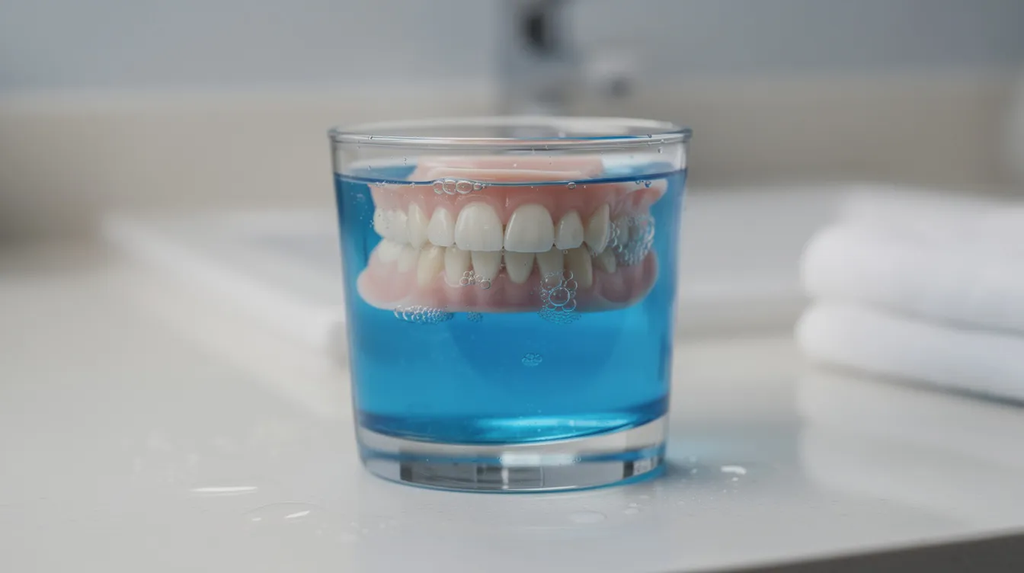
- Soak your dentures in a cleaning solution overnight for a deep clean.
- Rinse them thoroughly before putting them back in your mouth.
Cleaning your dentures this way helps prevent plaque from turning into a hard, stubborn biofilm.
Clean Your Mouth, Not Just The Denture
Bacteria also love to collect on the tongue, gums, cheeks, and any remaining natural teeth. So brush or scrape your tongue each day, gently clean your gums and the roof of your mouth, and continue brushing and flossing your natural teeth. Research has shown that tongue cleaning can really reduce bad breath in denture wearers.
Keep Your Mouth Moist
One of the best ways to battle bad breath is to keep your mouth moist. Drink water regularly throughout the day to help your saliva wash away bacteria and debris. Sugar-free gum or lozenges can also help stimulate saliva production when you need it. And if you’re taking medication that’s drying out your mouth, talk to your doctor so he can prescribe you some alternative medication.
Giving Your Gums a Break: Remove Dentures at Night
Make sure to give your gums a break by removing dentures while you sleep. Store them in water or a good soaking solution so they don’t dry out and lose their shape.
Using Denture Adhesive Responsibly
Adhesive can be a big help in keeping food from getting stuck underneath your dentures, but don’t forget to give the old adhesive a good scrub every day. Leaving it on can just create another place for bacteria to accumulate.
Keeping on Top of Regular Dental Visits
Regular visits with your dentist are a must for keeping an eye on any problems that might not be causing you too much trouble at home. They can clean and polish your dentures, adjust the fit, and give your gums and any remaining teeth a good check for disease.
It’s generally recommended that denture wearers see their dentist every six to twelve months to make sure everything is still in good shape.
When Bad Breath Means There’s More to It Than Just Dirty Dentures
If you’ve got bad breath that just won’t go away, no matter how well you take care of your dentures, there’s a good chance there’s something more going on that just cleaning alone can’t fix.
Watch Out for These Warning Signs
If you notice any of these signs, it’s time to get to the dentist for treatment:
- Bleeding, swollen, or painful gums
- Sores or white patches inside your mouth
- Cracked, loose, or worn dentures that are no longer fitting right
- A persistent metallic or just plain nasty taste in your mouth
- Trouble eating
- Changes in how your dentures fit inside your mouth
What’s Behind That Persistent Odor?
Sometimes, bad breath is caused by gum disease and the inflammation that comes with it; these conditions can be prime breeding grounds for bacteria that cause stinky breath. And then there’s denture stomatitis, a condition that often goes hand-in-hand with Candida; it’s a common problem for people with full dentures, and it can pop up without any obvious pain.
And let’s not forget that if you’ve got remaining natural teeth, decay or periodontal disease in those can also cause bad breath, especially if you’ve got partial dentures.
When Bad Breath Comes from Further Afield
Not all bad breath starts in the mouth. Sinus infections, poorly controlled diabetes, kidney disorders, and some digestive conditions can all cause stinky breath.
If your dentist can rule out anything to do with your dentures or mouth, further medical investigation might be in order.
Mouthwash and breath mints might be able to mask the problem for a little while, but they won’t actually treat the underlying cause. If you’ve got bad breath that persists for weeks, even after you’ve been taking good care of your dentures, it might be time to schedule a visit with your dentist to figure out what’s going on and get it sorted.

FAQ
How Often Should I Clean My Dentures to Avoid Bad Breath?
Try to give your dentures a good rinse after every meal, and a thorough clean once a day using a soft brush and a good soaking solution. It also helps to soak them overnight in denture cleanser to help remove plaque and prevent that nasty buildup that causes bad breath.
Do I Really Need to Take My Dentures Out at Night?
It’s really not a bad idea to take your dentures out at night. Sleeping in them can just let plaque build up and make it harder for your gum tissue to recover. And that’s just a recipe for bad breath and denture stomatitis.
Will Using Mouthwash Keep My Dentures from Smelling Bad?
No way. While mouthwash might help freshen your breath for a while, it won’t get rid of all the food and plaque that can build up on your dentures. So you still need to be brushing, rinsing, and soaking them regularly. Mouthwash is just a supplement to help keep things fresh, not a replacement for good old-fashioned cleaning.
What Type of Cleaner Should I Use on Dentures That Smell Bad?
Use a proper denture cleaner, and try to avoid using hot water, abrasive toothpaste, or bleach unless your dentist says it’s okay. And if your dentures still smell after a week of good cleaning, it’s probably time to get them checked out by a professional.
When Should I Replace Dentures That Keep Causing Bad Breath?
Dentures usually last around five to seven years. Cracks, stains, worn-out surfaces, or a poor fit can all trap harmful bacteria and food. If cleaning just won’t solve the problem, your dentist can take a look and decide whether you need a reline or a whole new set of dentures.