
Working out when to take kids to dentist is one of those things that catches a lot of parents off guard. But the thing is, dental care doesn’t have to wait until all the child’s teeth have popped up.
Early trips to the dentist are a great way to prevent tooth decay, keep an eye on how those baby teeth are developing, and set them up for great, lifelong oral health that will serve them for the rest of their lives.
- Try to get your child in for their first dental visit by their first birthday or within six months of their first tooth coming in, whichever comes first.
- These early visits can help prevent tooth decay, monitor development, and make dental care just another normal part of growing up.
- After the first appointment, most kids should be back to the dentist for a checkup every six months, unless their dentist thinks they need to come in more often.
- You should try to get them in a bit earlier if your child has got white or brown spots, is experiencing tooth pain, their gums are swollen, they’ve got bad breath that won’t go away, are sensitive to hot or cold foods and drinks, or if they’ve had a dental injury.
- Unfortunately, the average age of a child’s first dental visit is 2.6 years, which means a lot of kids are missing out on the benefits of early preventive care.
Why the First Dental Visit for Your Child Matters
Baby teeth are quite important for your child’s oral health, even if they might only be temporary, but they help your child chew, develop speech, and keep space for permanent teeth. An early dental check-up helps make sure that they are developing properly and can catch problems like tooth decay, enamel defects, tongue tie, or bite issues before they become more serious.
The American Academy of Pediatric Dentistry reckons tooth decay is the most common chronic disease in kids, yet most of it is preventable. Nearly one in four kids aged 2–5 have cavities. Early dental check-ups can reduce the need for invasive treatment, help kids build a positive relationship with the dentist, and lead to fewer dental procedures and lower costs over time.
Exactly When To Take Your Child to the Dentist
Setting your child up for successful, lifelong dental health starts at an early age. Get your child in for their first dental appointment by age 1 or within six months of the first baby tooth popping up, whichever comes first. You don’t have to wait for all the baby teeth to come in.
Most kids get their first tooth between 6–8 months, but some might get theirs later, around 12–14 months. Even if they don’t have any teeth by their first birthday, it’s still worth getting them in for a dental check-up.
When Home Care Isn’t Enough
Even if you’re extremely cautious and look after your child’s smile, there are instances in which a visit to the dentist is the only way to go. Take your kid to see a professional if you notice any of the following signs:
- White or brown spots on their teeth; this could be a sign that they are getting tooth decay
- Bad breath that just won’t go away could be a sign of decay or infection
- Red, swollen, or bleeding gums
- Tooth sensitivity to hot or cold foods and drinks
- Tooth pain or difficulty eating
- Lip, tongue, or tooth injuries caused by falls or other accidents
What Happens at a Child’s First Dental Appointment
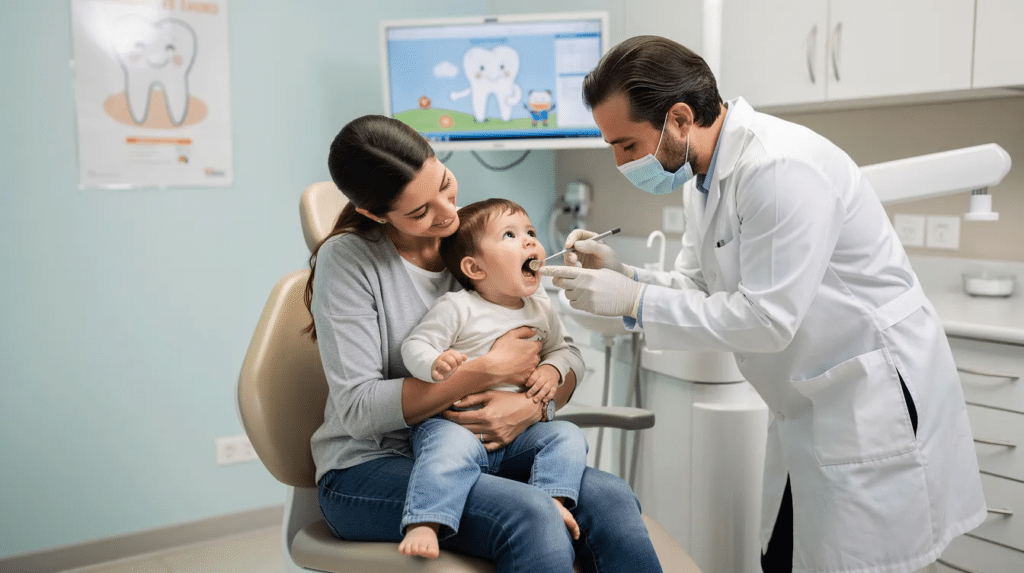
A child’s first dental appointment is usually pretty short and all about prevention and education, and it usually lasts about half an hour. Pediatric dental offices are designed to be kid-friendly and help them feel at ease from the start. With babies, the dentist might even do the examination from a gentle knee-to-knee position with the parent.
The dentist will take a look at the baby teeth, gums, tongue, jaw development, and bite alignment, checking for any signs of tooth decay, enamel defects, and other oral development issues. If there are teeth present, they might give them a gentle clean and apply fluoride varnish. They usually won’t do an X-ray unless they think there might be some hidden decay or trauma.
You’ll also get some advice from the dentist on things like brushing, fluoride toothpaste, diet, thumb sucking, pacifier habits, and avoiding sugary drinks at bedtime. They’ll help you get your child into good oral hygiene habits from the start.
How to Prepare for Your Child’s First Dentist Visit
A bit of preparation can make all the difference:
- Schedule smart: Try to get them in for a check-up when they are relaxed and have had a snack to eat, preferably a bit earlier in the day.
- Choose a pediatric dentist: Ask around and find out which dentist is the best for young children.
- Use positive language: Explain to your child why they need to go to the dentist and try to avoid frightening them with “hurt” or “shot”- type language.
- Familiarize your child: Read them a book or watch a video about going to the dentist to help them feel more at ease.
- Bring a comfort item: A favourite toy or blanket can be a big help, and if you can stay calm, it’ll help your child feel more relaxed too.
- Write down questions: Get a pen and paper and jot down any questions you’ve got about brushing, fluoride, pacifiers, or anything else.
- Get a pre-visit tour: Some pediatric dental offices let kids have a sneaky look around the office before they come in for their actual visit.
After the First Visit: How Often Should Kids See the Dentist?
After the first check-up, most kids should go back to the dentist for a check-up every six months. Kids at higher risk for tooth decay might need to go every 3–4 months, especially if they have early signs of decay, eat sweets regularly, or have special health needs. Your kid’s dentist will figure out how often they should come in based on their individual oral health needs.
If your kid’s still sucking their thumb after 4, it can start to affect their jaw and tooth alignment, so bring it up at their next dentist visit.
| Age Range | What the Dentist Monitors |
| 1–3 years | Baby teeth eruption, early decay, oral habits |
| 3–5 years | Spacing, bite, readiness for an older child’s needs |
| 6–7 years | First adult tooth appears (permanent teeth), sealants |
| 7+ years | Alignment; possible orthodontist referral |
Taking Care of Your Baby’s Oral Health at Home
At home, keep up your daily dental care routine: wipe their gums before teeth come in, then brush twice a day with fluoride toothpaste and a soft-bristled brush once teeth erupt. Keep an eye on their brushing until they’re at least 7 or 8, and keep an eye on their eating habits too; your child’s eating habits will also affect your child’s overall oral health, so try to limit sugary snacks, drinks, and frequent snacking, as these can increase the risk of tooth decay.
Common mistakes parents make at home include: not minding your baby’s first teeth and teething stage, waiting for too long to start brushing and/or teaching them how to properly brush, and allowing kids to go to sleep with a baby bottle filled with sugary drinks.
All these will negatively affect your child’s oral development and cause issues early.
Encourage water and a balanced diet to help keep those little teeth healthy.
Thumb sucking after age 4 can affect jaw development and tooth alignment, so mention this habit at your next dental appointment if it persists.
Helping your child brush properly and turning it into a daily habit, eating well, and building healthy oral habits from an early age can set them up for healthy teeth and a healthy smile for life.
FAQ
What if my child has no teeth by their first birthday?
Still schedule a dental visit; delayed eruption is often normal but should require a dental checkup.
Can I take my child to a general dentist instead of a pediatric dentist?
Yes, but pediatric dentists have extra training and child‑friendly environments that help with very young or anxious kids.
How long does a first dental visit usually take?
About 30 minutes for an exam, cleaning if needed, and parent questions; nervous toddlers may have shorter “happy visits.”
Will my baby need fluoride at the first visit?
If teeth are present, a quick fluoride varnish may be applied, and safe toothpaste use will be discussed.
What should I do if my child is terrified and refuses to open their mouth?
Resistance is common; pediatric teams adapt with gentle exams, shorter visits, or gradual trust‑building until the child settles.