
If you’re living with a chipped tooth, tiny gaps between your teeth, or stubborn stains that whitening can’t get rid of, then getting composite bonding teeth is probably the fastest & most affordable way to take your smile to the next level. But what is composite bonding anyway?
Composite bonding, also known as dental bonding or teeth bonding, is a minimally invasive cosmetic dental treatment where a dentist applies a special tooth-colored resin directly to a tooth to fix imperfections related to the shape, colour, or alignment. The composite resin material is like play dough, soft, malleable & easy to shape. It gets hardened with a special light & can be used to fix chipped teeth, close spaces, or reshape worn edges. It’s attached to the tooth’s enamel and dentin, making it a restoration that looks & feels just like a natural tooth.
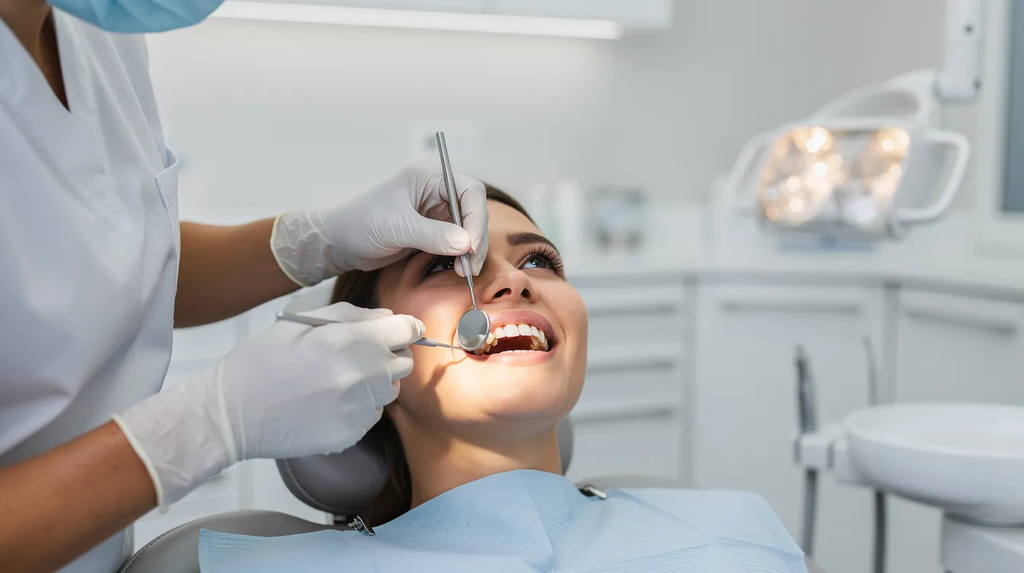
What Cosmetic Issues Can Dental Bonding Fix?
The good news is that dental bonding is a super versatile cosmetic dentistry procedure that can fix a wide range of mild to moderate aesthetic problems, especially on front teeth that show when you smile. It can repair chips, gaps, and discolorations in just one appointment.
Some of the things composite bonding can fix include:
- Tiny chips & hairline cracks
- Worn or uneven teeth and edges
- Small gaps between teeth (those annoying little diastemas)
- Slightly rotated or set-back teeth
- “Peg” teeth that are too small
Composite bonding can also change the shape or length of teeth, which makes it really useful for people who have teeth that look too short or are asymmetrical. If you have stains that whitening won’t fix, like the white spots or fluorosis kind, the dentist can just mask them over with layers of resin that are carefully colour-matched to your teeth.
And if you need a bit of a smile makeover, bonding can be combined with a bit of enamel reshaping (cosmetic contouring) to create smoother, more symmetrical front teeth that make you look your best so you can smile with confidence.
Dental Bonding Procedure: Step‑By‑Step
The good news is that the bonding procedure is pretty straightforward, and most people find it to be a pretty painless procedure. It usually takes about 30 to 60 minutes per tooth, depending on how complex the case is.
Here’s what happens during a typical dental bonding procedure:
- Getting your smile sorted: Your dentist will take a good look at your teeth and gums, chat with you about what you want to change, check for any decay or cracks, and make sure that bonding is the right thing to do.
- Finding the right colour: Your dentist will use a shade guide or some fancy digital tools to find a composite colour that matches your natural teeth exactly.
- Getting ready: The tooth is cleaned and lightly roughened to help the bonding material stick, then the dentist applies a special gel to help it all stick together; this cosmetic procedure doesn’t really require enamel removal.
- Adding the bonding resin: The dentist will add the soft composite resin in layers and then use a special curing light to harden each one. They’ll use their hands to shape it into the right shape, closing gaps, rebuilding corners, smoothing edges, and so on.
- Final Adjustments: Once it’s all hardened, the dentist will refine the shape, check the bite & polish the bonded teeth so they look & feel just like your natural teeth.
Since this is usually a single-day procedure, you will be able to notice the before and after results almost immediately.
Why Composite Bonding Is a Great Cosmetic Dental Procedure
There are lots of good reasons to choose composite bonding for your cosmetic smile makeover. For a start, it’s usually quick; many procedures can be done in just one appointment & you won’t need to wait around for lab work or temporary restorations, unlike with some other cosmetic treatments.
The resin can also be colour-matched to your natural teeth, so it’s really hard to tell where the bonding is. And because it’s soft and malleable, it’s really versatile; it’s not just for fixing chips & gaps. It can also be used to protect exposed root surfaces & reinforce worn or chipped edges.
How Long Do Bonded Teeth Last?
So how long do your bonded teeth last? Well, it really depends on a few things, like how well you look after them, and whether you have any bad habits that might be wearing them down.
Generally speaking, composite bonding lasts anywhere from 5 to 7 years. Some people are lucky & get results that last up to 10 years, but that’s not always the case. And if you do need a repair or a touch-up, that can usually be done pretty easily.
What Affects How Long Bonded Teeth Last?
So what’s the secret to making your bonding last longer? Well, a few things help. For example:
- Where it is: Bonding on the edges of front teeth that are used for biting & chewing will wear off faster than bonding on the top of teeth that don’t take as much punishment.
- Your daily habits: Some habits can make your bonding wear off faster, things like biting your nails or chewing on pens.
- How well you take care of them: If you take good care of your teeth & avoid doing things that might damage the bonding, it will last longer.
- Staining: Composite bonding is really prone to getting stained by all the usual suspects, coffee, tea, red wine, curry… basically anything that can leave a pesky stain behind. And to be honest, bonding just isn’t as stain-resistant as other options like porcelain restorations. So, you might find yourself needing to get it polished or replaced every now and then to keep its appearance looking its best.
- Chipping: Over time, bonding can chip, and it just isn’t as durable as veneers are either. Luckily, with regular dentist check-ups, you can catch any wear or chipping of the edges early on before it becomes a bigger problem you need to deal with.
Caring For Your Bonded Teeth
Keeping your bonded teeth in good nick isn’t too hard; just treat them the same as your natural teeth with a few extra precautions to keep the bonding looking its best.
- Brush your bonded teeth with a soft toothbrush and a non-abrasive fluoride toothpaste twice a day, floss daily, and if you want an extra bit of protection against decay, then consider an alcohol-free fluoride mouth rinse, including a fluoride rinse in that.
- Try to limit your intake of drinks that are going to stain your teeth (we all know it’s hard to avoid coffee, but try sipping it through a straw!) and don’t smoke, not that anyone wants you to, but your bonded teeth will thank you. Also, please don’t use your teeth as tools; that’s just common sense.
- If you tend to bite your nails or grind your teeth at night, you might need to get a custom night guard to prevent any further damage to your bonded teeth.
- The same goes for biting into very hard or acidic foods with bonded edges; try to avoid doing that if you can.
- From time to time, you’ll need to go back to the dentist to get your bonded teeth polished or touched up to keep them looking their best.
If you notice any rough patches, sharp edges, or any change in your bite, then get to the dentist pronto so they can smooth it over or fix it before it gets any worse.
Costs, Insurance & How Bonding Compares To Other Cosmetic Treatments
Composite bonding works out from roughly $150 to $800 per tooth, though that can vary depending on how straightforward the case is and how much work is needed. Most of the time you’ll be looking at around 300-800 per tooth.
Unfortunately, dental insurance really doesn’t cover cosmetic bonding, and I know that can be a real bummer. However, if the work is being done to repair some chips caused by accident, or to restore some decayed areas, then it might be covered a bit, so it’s always worth checking with your insurance provider to see if your cosmetic treatment fits the bill.
| Treatment | Cost Per Tooth | Expected Lifespan | Enamel Removal | Visits |
| Composite bonding | 150–800 | 3–10 years | Little to none | Just one visit |
| Porcelain veneers | $1,000+ | 10–15 years | Required | 2+ visits |
| Dental crowns | 1,000–3,500+ | 10–25 years | Significant | 2+ visits |
Veneers last longer than bonding, typically 10 to 15 years, but porcelain veneers can cost up to $1,000 per tooth more compared to bonding. Teeth whitening is ideal for overall colour improvement but cannot change tooth shape or fix deep stains, while teeth bonding can do both, making it very cost-effective compared to other cosmetic dental procedures. If you are unsure which route to take, book a consultation so your dentist can outline personalised options side by side.
When Composite Bonding Is Not The Best Option
While bonding is a great solution with many benefits for loads of cosmetic issues, it isn’t the answer to every problem; there are some situations where it’s just not the best fit. For example, if you’ve got a tooth that’s got some extensive structural damage, then you’re probably going to need a full-coverage crown or an onlay.
Other situations where bonding alone isn’t going to cut it are:
- If you’re missing a tooth, then you’ll need to sort out some dental implants, a bridge, or some dentures.
- If you’ve got some pretty significant crowding, or rotations in your teeth, or some bite problems, then you’ll need to get that sorted first with some orthodontic care before you can even think about bonding.
- If you’re looking for a complete smile makeover, then veneers might be a better option for you, as they are more consistent and long-lasting.
If you’re experiencing any toothaches, swelling, sensitivity, or loose teeth, then you need to get to the dentist ASAP; those are all signs of a more serious problem that needs to be sorted before you even think about any cosmetic work.
Booking A Dental Bonding Appointment Today
If you want to enhance your smile, whether it’s a chipped tooth or a bit of staining, then it can really make all the difference in how confident you feel in photos and just in general. When you go in for your initial consultation, your cosmetic dentist will chat with you about what you want to change, look at your teeth, take some photos, and explain the whole process, timeline, and cost to you. Just take a minute to think about what you want to change and mention if you have any history of grinding or jaw discomfort. Many of your everyday composite bonding cases can be done in a single appointment, so you can sort out your smile and get back to life as normal.