
A sharp-tooth-cutting-tongue issue is the kind of problem that demands some serious attention the moment it starts. Whether from a nasty fall, biting into something hard, or an old filling finally giving way, that jagged edge can turn even the simplest things into a right proper pain-fest. Here’s the lowdown and what to do, from the get-go.
- A broken or chipped tooth with a nasty edge can keep cutting your tongue and is considered a dental emergency, especially if it’s causing you pain or bleeding.
- Rinse your mouth out with some warm salt water, cover up the sharp edge with some dental wax or sugar-free gum, and steer clear of hot or cold or hard drinks on that side, which can provide temporary relief.
- Don’t be tempted to even think about filing or sanding the tooth at home with a nail file; that’s just asking for trouble. Get in touch with a dentist the same day for some professional care.
- Timely treatment, whether that’s smoothing, bonding, or fitting a crown, is key to keeping your oral health on track, stopping infection in its tracks, and stopping your tongue from getting continually injured.
- Get in to see a dentist ASAP to stop the damage from a sharp tooth getting any worse.
Why a Sharp Tooth Cuts Your Tongue
A sharp tooth cuts the tongue when chips, cracks, old fillings start to fail, or uneven wear from grinding leaves a nasty, jagged edge behind. When the enamel cracks, it breaks along microscopic lines and turns into tiny little blades, while exposed dentin leaves a rough, irritating surface.
Because your tongue is constantly moving, even a tiny break causes a whole load of micro-cuts and soreness.
Whether it’s from a sudden blow or long-term grinding, these sharp edges start to take their toll on the back and front teeth, tongue, cheek, and lips.
And here’s the thing: because enamel can’t be regrown, these sharp edges are stuck around until you get them professionally reshaped or restored by a dentist.

Is a Sharp Tooth Cutting Your Tongue a Dental Emergency?
A sharp, broken tooth can go from being a bit of a nuisance to a real dental emergency when you start to notice any of these symptoms:
- Heavy or persistent bleeding from the tongue or mouth
- Severe pain that radiates to the jaw, ear, or head
- A deep crack in the tooth that’s easily visible
- A broken or chipped tooth with loose bits that are hanging around
- Trouble swallowing or speaking
- An exposed nerve or pulp visible inside the tooth
Get in to see a dentist or hospital A&E right away if it’s severe pain or you can see the nerve inside the tooth. Even small cuts left unattended raise the risk of infection, because bacteria from plaque can easily get in through tiny wounds. Look out for signs of infection like a fever, increasing pain, or pus. TRICARE reckons broken teeth causing soft tissue damage are urgent, and you should get in to see a dentist within 24 to 48 hours.
A chipped tooth can easily become a deeper crack and more sensitive, too. If you just leave it, it can turn into an abscess, worse breaks, or even the loss of the tooth altogether, especially if the crack reaches the nerve. A broken tooth can cause infection or nerve damage if you don’t get it treated right away. Sharp edges can also trigger chronic tongue ulcers that make eating and speaking a real struggle, which is another good reason to get in to see a dentist sharpish.
Immediate Home Steps When a Tooth Is Cutting Your Tongue
These measures can help protect your tongue until you can get to a dentist, but they’re not a substitute for proper treatment.
- Rinse with warm salt water: Mix half a teaspoon of salt in a glass of warm water and gently rinse for 30 seconds. This helps clean the area, soothe the irritation, and reduce bacteria.
- Control bleeding: If your tongue is bleeding, gently bite down on some clean gauze or a damp tea bag for 10 to 15 minutes without taking a look, until the bleeding stops.
- Manage your pain: Take some over-the-counter painkillers like ibuprofen or acetaminophen as directed. Don’t put aspirin directly on the tooth or gums.
- Cut down on swelling: Apply a cold compress to the outside of your cheek for 10 to 15 minutes at a time to help with the inflammation. Avoid putting ice directly on the tooth or tongue.
- Dietary adjustments for the first 24 hours: stick to soft foods like yogurt, smoothies, and scrambled eggs, & avoid the hard, crunchy stuff for a while.
Dietary adjustments for the first 24 hours:
| Favor | Avoid |
| Soft foods: yogurt, smoothies, scrambled eggs | Hard foods and crunchy items |
| Cool or room-temperature items | Hot or cold beverages at extremes |
| Bland flavors | Spicy or acidic foods |
Avoid hard, crunchy, spicy, or acidic foods, as they can worsen irritation and slow healing. Also, try not to touch the sharp edge with your tongue, since repeated contact can keep the injury from healing and make the soreness last longer.
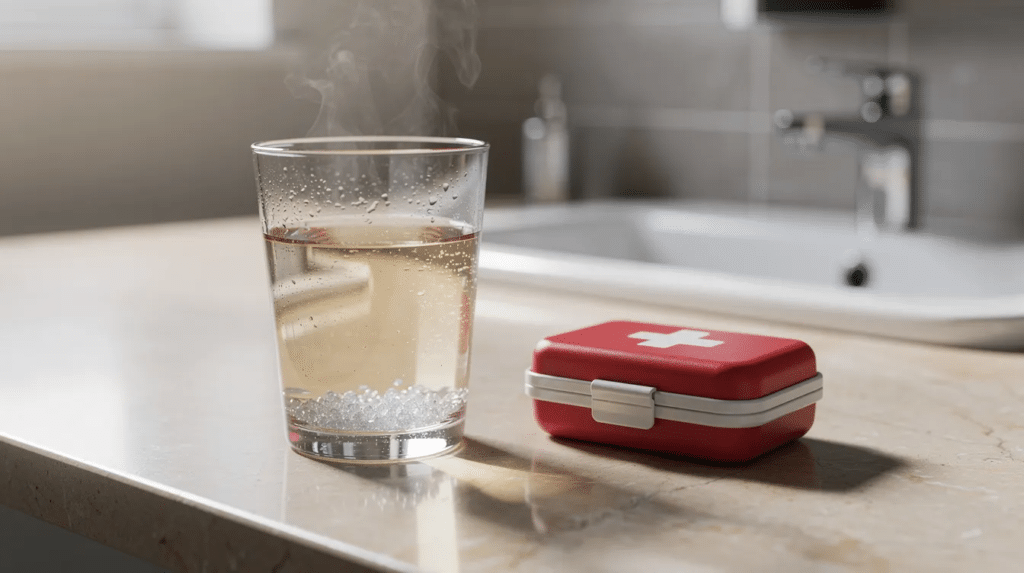
Safer Ways to Protect Your Tongue from a Sharp Edge (And What to Avoid)
The idea is simple: cover up the sharp edge to prevent it from cutting your tongue until you can get to a dentist.
- Dental or orthodontic wax: Dry the tooth, roll a small piece of wax between your fingers, and press it over the sharp area. It provides safe, temporary protection and is usually available at the pharmacy.
- Sugar-free Chewing Gum: If you can’t get wax, cover the chipped area with sugar-free gum and hold off on chewing on that side. Temporary fill kits from the chemist can also keep the tooth safe until you can see a dentist.
What to Avoid:
- Don’t try fixing it yourself: Filing the tooth with a nail file or metal tool can remove too much enamel, expose the dentin, and crack the tooth.
- No superglue or household fixatives: They can introduce chemicals that will make future treatment more complicated.
- Avoid DIY repairs: The last thing you want to do is make things worse.
Popping a bit of gum or wax over the edge can give you some short-term relief, but it’s not a long-term fix. If you’re using wax overnight, make sure it’s stuck on properly and take it out the next morning so it doesn’t get loose and cause a choking hazard.
How Dentists Fix Sharp, Broken or Chipped Teeth
What the dentist does depends on how bad the damage is and whether the dentin or the pulp is affected.
- Examination: The dentist will take a good look at the tooth and might take an X-ray to check if there are any hidden cracks, root damage, or tooth decay that you can’t see.
- Minor chips or sharp edges: Most of the time, a bit of polishing or recontouring the enamel can sort things out in one go.
- Moderate damage: If the chip is a bit deeper, the dentist can use a tooth-coloured resin to rebuild the area and smooth everything out.
- Big fractures: If you’ve lost a lot of tooth and it’s weakened, a crown is probably the way to go. It covers the tooth, takes away the sharp edges and gives it some strength back.
- Severe cases: If the chip is so deep it’s hit the nerve, a root canal will be needed before you can get a crown, while sub-gumline fractures may need to be extracted and replaced. A custom mouthguard can help prevent grinding damage in the future.

Risks of Leaving a Broken Tooth or Tongue Cuts Untreated
Delaying getting a broken tooth looked at because you hope it will get better on its own is a bad idea. Here are some reasons why more people end up with worse outcomes because they put it off:
- Untreated broken teeth can cause chronic soft tissue damage-scarring, thickening of the tongue tissue, altered taste, and difficulty speaking, eating, or even brushing properly.
- Bacteria can get in through the chip, leading to infections. Exposed dentin and cracks in the tooth give bacteria the perfect place to establish themselves and cause all sorts of problems.
- If you don’t get a broken tooth sorted out, you can end up with nerve damage and tooth loss. Infections can spread and cause all sorts of problems, including facial swelling, fever, and in rare cases even system-wide health issues that need antibiotics or surgical drainage.
- A small chip can quickly turn into a big fracture if you leave it alone. The teeth around the broken tooth have to cope with abnormal forces, and that can cause misalignment and further damage.
- Delaying getting a broken tooth sorted out can turn what would have been a minor repair into a major operation; smoothing or bonding turns into a crown, root canal, or extraction.
Ignoring a broken tooth can make things a lot worse over time. Getting it sorted out ASAP, even if it’s just a minor problem, helps keep your oral health on track, prevents bleeding from getting worse, and stops complications from developing.
Prevention: How to Keep Your Teeth from Getting Sharp and Your Tongue from Getting Cut in the Future
Prevention is the best medicine; it helps keep both your teeth and soft tissues like the tongue, cheek, and lips safe.
- Be careful with your habits: Don’t bite down on ice cubes, pens, popcorn kernels, or hard candies. Don’t use your teeth to open things. These are the most common causes of a broken tooth.
- Wear a mouthguard: A properly fitted mouthguard can save your teeth when you’re playing sports, while a night guard can help if you grind your teeth at night.
- Keep up the regular dentist check-ups: Your dentist can pick up on things like hairline fractures, worn fillings or failing crowns before they cause any problems.
- Practice proper oral hygiene: Brush your teeth twice a day with fluoride toothpaste and floss every day to keep your teeth strong and healthy.
- Be careful with temperature extremes: Suddenly switching from ice-cold drinks to scalding hot food can cause enamel stress, and if you’ve already got a micro fracture, it’s a recipe for disaster. Take it easy with hot and cold foods.
FAQ
Can a sharp broken tooth edge fix itself?
No, sorry. Tooth enamel doesn’t grow back once it’s chipped, so even if you get lucky and the pain goes away, the tooth will still cause cuts and increase the risk of decay. A dentist can fix it safely and for good with a bit of polishing, bonding, or restoration.
How long can I put off seeing a dentist if my tooth is cutting my tongue?
If you’re getting a sharp tooth edge cutting your tongue, it’s best to see a dentist within a few days. If the pain is severe, you’ve got a deep fracture, you’re swelling up or bleeding uncontrollably, get to a dentist ASAP. The sooner you get it sorted, the better; delays can turn minor problems into major ones.### Is it ever safe to file down a sharp tooth at home?
No, it’s not. Filing a tooth at home with a nail file or some other tool is a recipe for disaster. It can damage the enamel, expose the sensitive dentin underneath, and weaken the tooth to the point where it’s beyond repair. So, the best thing to do for now is to just cover the edge with some dental wax or sugar-free gum until you can get to the dentist.
Can a tongue ulcer from a sharp tooth become serious?
Most of the time, tongue ulcers caused by a sharp tooth will start to heal on their own after 10 to 14 days once the tooth has been smoothed out a bit. But if yours lasts longer than three weeks, or it gets any bigger, or you start to get a fever, lose weight, or notice any lumps under your jaw, then you need to get to the dentist pronto.
Will I need a dental X-ray if my chipped tooth is cutting my tongue?
It’s pretty likely that you will. An X-ray can help your dentist figure out if there are any cracks, decay, or infections underneath that chipped tooth that you can’t see. Whether or not you actually need one depends on the size of the chip, what your symptoms are, and if you’ve had any other dental work done in the past, but it’s a good way to help your dentist pick the best course of action to fix the tooth.