
Drinking matcha can lead to very mild, surface-level staining; it tends to cause less discoloration than coffee or black tea. Matcha pigments have a tendency to stick to plaque a lot better than to the enamel on your teeth, which is why taking good care of your teeth & gums is super important. Regular brushing, flossing & rinsing with water after you drink matcha can help your smile stay bright, and avoiding certain habits such as sipping on matcha for too long, using a straw, & getting regular cleanings from a dentist can all help too. As a bonus, matcha actually has some great oral health benefits, like reducing cavity-causing bacteria, soothing gum inflammation, and helping prevent bad breath.
Where Does Matcha Come From?
Matcha is a finely ground green tea powder made from whole Camellia sinensis leaves, and it’s become one of those trendy staples in lattes, wellness drinks, and restaurant menus since the early 2010s. Because you eat the whole leaf rather than just an infusion, the amount of stuff hitting your teeth is a lot higher than with regular tea.
So, does matcha stain teeth? The answer is yes, matcha can cause some tooth discoloration over time. But the good news is that staining from matcha is generally pretty mild to moderate, and usually less bad than coffee or black tea. A matcha stain will probably appear as a light greenish or yellowish tinge, and it tends to sit on the surface more than it deeply penetrates the enamel on your teeth.
Daily drinkers who have 1-2 cups of matcha lattes or straight matcha can start to see some tooth discoloration over time, especially if they don’t take good care of their teeth. The good news is that if you brush regularly, floss, and get regular cleanings, most matcha staining is pretty temporary and pretty easy to manage.
Why Does Matcha Stain Teeth?
Teeth staining isn’t just caused by direct contact with “dark drinks,” you know. It happens when chromogens (pigments), tannins, and a rough or porous enamel surface all come together. Tannins are chemical compounds that help stains stick to the protein layer on your teeth.
Matcha is chock full of chlorophyll & tannins that can cling to your teeth. The chlorophyll is what gives matcha its bright, vibrant green color, but the catechins & phenolic acids in it can also make stains pretty bad. Because matcha is a fine powder suspended in water, rather than just an infusion like green tea, particles can get stuck in the little grooves between your teeth, along the gumline, and around the front teeth.
Matcha pigments tend to cling a lot more to dental plaque than to clean enamel. If you do sipping matcha over a long time, have a dry mouth, smoke, or have existing plaque buildup, you’re at a higher risk for stains. People with worn-down or thin tooth enamel are more prone to stains, too, which can make even small surface stains look a lot worse.
Matcha vs. Green Tea, Black Tea, and Coffee
Not all teas and coffees are created equal when it comes to staining your teeth. Green tea usually causes pretty mild, grayish staining, but black tea will leave yellow-brown stains on your teeth because it has a lot more tannins. Coffee, on the other hand, is like a one-two punch; it’s got dark pigments, plus it is super acidic, which can cause deep, stubborn stains.
Matcha can stain teeth, but it’s less likely to than coffee. Matcha has fewer tannins than coffee, so that reduces the risk of stains, and matcha’s green pigments are generally not as intense as coffee’s dark ones. Some research on dental composites found that matcha produced color-change values similar to coffee, but way lower than red wine, which suggests matcha has a pretty moderate staining potential overall.
Some people who switch from drinking multiple coffees a day to 1-2 cups of matcha may actually notice fewer new stains over time, especially if they keep up good oral hygiene.
Oral Health Benefits of Matcha (Beyond Staining)
A greenish tinge on your teeth doesn’t necessarily mean you’ve got unhealthy teeth. In fact, matcha has some pretty cool overall dental health benefits that a lot of other drinks don’t have.
Matcha helps kill off bacteria in your mouth. It’s got catechins, especially EGCG, that have been shown to inhibit that pesky bacterium Streptococcus mutans, which helps cavity formation. Research has found that catechins and fluoride used together can reduce bacterial acid production by 47-86.6%, helping to prevent tooth decay. Matcha also helps prevent cavities & periodontal disease by reducing inflammatory markers in your gums and promoting a healthy mouth flora with minimal bad bacteria.
Matcha is also far less acidic than coffee, which means it’s less likely to erode tooth enamel; its pH is typically between 5.5 & 7.0 compared to coffee, which is a lot more acidic.
That being said, matcha is not a substitute for fluoride toothpaste, floss, or regular dental check-ups. Think of these health benefits as a bonus, not a replacement for your regular dental health routine.
Matcha Lattes, Sugar, & Enamel
There’s a world of difference between pure matcha whisked with water and the matcha lattes sold in coffee shops or ready-to-drink cans. Many of these beverages contain large amounts of added sugar and flavored syrups that feed cavity-causing bacteria, increasing the risk of tooth decay and gradually weakening tooth enamel over time.
Sugar is also a concern because it can make it easier for your teeth to absorb pigments from drinks, allowing staining compounds to penetrate the enamel and contribute to discoloration. While milk may help buffer acidity and slightly reduce tannin staining, the sugar content is often the bigger threat to your oral health. To get the most benefits from matcha, choose unsweetened or lightly sweetened options, skip the flavored syrups, and treat heavily sweetened matcha drinks as an occasional indulgence rather than an everyday habit.
Practical Tips to Prevent Matcha Stain on Your Teeth
You don’t have to go cold turkey on matcha to have a healthy smile. A few tiny, consistent daily habits will prevent staining far more effectively than any one product you can buy. Brushing after drinking matcha is a no-brainer, and the same strategies will work whether you like your matcha hot, iced, or as a latte.
Use a Straw for Iced Matcha & Matcha Lattes
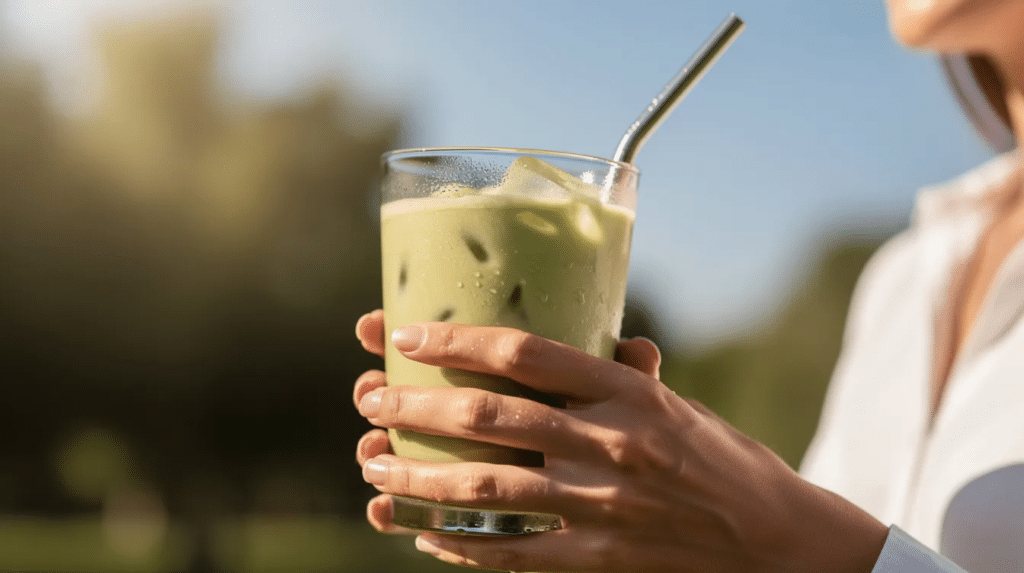
Using a straw is a simple way to keep matcha’s green pigments from getting all over your teeth. Just stick the straw in the back of your mouth and sip away; it does the trick. Reusable stainless steel, silicone, or glass straws are all good bets for cold drinks, and they’re pretty inexpensive to boot.
Rinse With Water After You Drink Matcha
Rinse your mouth with water after you’ve had a cup of matcha. A quick swig of water (10-20 seconds will do) does a great job of washing away any surface stains and tannins that might be lurking on your teeth before they have a chance to do any damage. This is way easier on your teeth than brushing them straight away, and you can even do it while you’re at work or on your way to school.
Don’t Sip Matcha All Day Long
Resist the temptation to sip matcha throughout the day; it’s just going to lead to more staining in the long run. If you limit yourself to a single cup and drink it in one go, it’s a lot less likely to cause any problems. Try to stick to one cup a day, and don’t graze on it all day long.
Wait a Bit Before Brushing Your Teeth
Wait 30 minutes before brushing your teeth after a cup of matcha. Our teeth get a bit soft after we drink acidic stuff, and brushing them too soon can just wear away that soft surface layer and leave your teeth more prone to staining and sensitivity. So give it 30 minutes, then brush gently with a soft-bristled toothbrush.
Keep Up Your Daily Oral Hygiene Routine
It’s business as usual when it comes to brushing and flossing, even if you love matcha! Brush twice a day with some whitening toothpaste to keep your teeth looking their best, and make sure to pay special attention to those front teeth; that’s where stains are most noticeable. Daily flossing is also a must; it helps to get rid of any stray matcha particles that might be lurking between your teeth, and can help keep your gums healthy, too.
What to Do If Your Teeth Are Already Showing Matcha Stains And When DSA Gets In The Picture
If your teeth are already showing some matcha stains, matcha is probably only part of the picture. Age, diet, tobacco use, and other daily habits can all contribute to discoloration over time. Professional teeth whitening can help lift many surface stains and even improve some deeper discoloration, while over-the-counter whitening strips may help with milder cases. Before starting any whitening treatment, it’s important to consult your dentist, especially if you have sensitive teeth, crowns, veneers, fillings, or other dental work.
At Dental Solutions Algodones, our team provides personalized care designed around your unique needs. As members of the American Dental Association, we get ongoing training at internationally recognized institutions to deliver high-quality treatment you can trust. Whether you’re considering getting a bright smile with a professional teeth whitening or simply want to understand the cause of stubborn stains, we’re here to help you regain confidence in your smile. We also offer free estimates and personalized consultations to help you explore your options before beginning treatment.
What Matcha Stains Can Reveal About Your Oral Health
While matcha stains can be a pain, they can also be a warning sign that something is going on with your teeth that needs attention. If your teeth are staining unevenly or quickly, it might be a sign that there’s some damage to the enamel, or that you’ve got some other oral health issue that needs looking at. For instance, if your gums are a bit recessed (which can happen if you brush too hard or have gum disease), it can make your teeth look stained way more than they would otherwise. And if you notice that some of your teeth are picking up more staining than others, it might be worth having a check-up to make sure that there’s not some issue like a cavity or a crack in the tooth that needs fixing.
FAQ
Can I drink matcha after professional teeth whitening?
Most dentists will advise you to steer clear of matcha (and other dark-coloured drinks) for a couple of days after a whitening session, the enamel on your teeth is a bit more porous for a bit, and you don’t want to risk staining it while it’s in that vulnerable state. After that, it’s probably okay to drink matcha in moderation (along with rinsing your mouth with water afterwards and using a straw for cold drinks).
How many cups of matcha can I drink before badly staining my teeth?
There’s no one-size-fits-all answer, but if your enamel is strong and you’ve got good oral hygiene, you’re unlikely to get significant staining from 1-2 cups of unsweetened matcha per day. If you’re drinking 3+ pigmented beverages like tea, coffee, and matcha daily, you’re going to see some sort of discoloration over time, but good oral habits like brushing, flossing, and regular dentist visits matter far more than the exact number of cups you have.
Is drinking matcha better for your teeth than drinking coffee?
When it comes to staining, most people find that matcha causes less intense and easier-to-remove tooth discolouration than coffee. Unsweetened matcha doesn’t dry out your mouth or feed bad bacteria like sugary coffee drinks can. And get this, matcha has some compounds, called catechins, that may actually help reduce the bad bacteria and gum inflammation that black coffee can bring on. So if you’re used to drinking sugary coffee but switch over to mostly unsweetened matcha, your teeth and gums are likely to thank you.
Will a whitening toothpaste actually remove matcha stains?
Most whitening toothpastes work by using mild abrasives or low-level peroxide to scrub away surface stains from stuff like tea, coffee, and food. And yes, they can even help lighten up some of the matcha stains over time, especially if you’re also flossing and getting your teeth cleaned regularly. Just be careful not to overdo it on the abrasive stuff, as they can actually thin out your enamel a bit. Ask your dentist to recommend a toothpaste that gets the stain removal right without sacrificing your enamel.
Does switching from black tea to matcha really make a difference when it comes to staining?
Lots of people say they notice a big difference after switching from multiple cups of black tea to matcha; their teeth don’t stain as quickly or as darkly. And it’s because black tea’s got a lot more tannins and darker pigments that leave those nasty yellow-brown stains, whereas matcha’s stains are generally less embedded. But of course, this is most effective when you’re also brushing and flossing regularly and getting a dental cleaning now and again. Even so, if you smoke or drink red wine, you’re still going to see some discoloration regardless of which tea you choose.