Most people who still have their own natural teeth brush them every day but still manage to miss the plaque buildup that dental pros spot right away. The difference between your routine & a hygienist’s is using the right gear and doing it right.
You can do a pretty darn good job with your own teeth at home with a decent electric toothbrush, some fluoride toothpaste, and daily flossing or interdental cleaning; this usually helps to avoid most oral health issues. However, all that gunk down at the gum line still needs to be zapped by a dental professional.
A complete oral care routine is all about:
- Gentle brushing twice a day for 2 whole minutes (no rush, just take your time)
- Getting in between your teeth once a day
- Swishing with a fluoride or antimicrobial mouthwash, but not right after brushing
Practicing a good oral hygiene routine at home helps keep healthy teeth, preventing gum disease and tooth decay, and protects crowns, implants, and other dental work. Extras like a tongue scraper or occasional baking soda can also help, as long as they’re used gently.
Even with excellent home care, regular dental check-ups every 6–12 months are essential for tartar removal and keeping your healthy teeth and gums in good condition.

How Dentists and Hygienists Really Clean Your Teeth
When a pro comes to clean your teeth, the hygienist is going to examine your teeth and gums, get rid of all the plaque and tartar (above and below the gum line), give your teeth a nice polish to remove stains, floss you out, and may even give you a fluoride treatment to keep things strong.
Dental hygienists will also check the health of your gums by measuring how deep the gum pockets are, seeing if your gums bleed when you floss, and giving you some personalized advice on how to keep your gums from getting sick in the first place.
Now, a routine professional cleaning is different from a deep cleaning (scaling and root planing), which is what you need if you’ve got tartar built up below the gum line, something that just can’t be done at home safely. The idea with daily oral care is to get rid of the soft stuff before it hardens into tartar, making those pro cleanings a lot easier. And if you’re wearing braces, implants, or bridges, you’ll need to do an extra good job at home because all that hardware can trap a lot of gunk.
Build Your At-Home “Dentist Kit”
It’s the tools that make the difference, not how hard you brush.
- Electric toothbrush: Go for an oscillating-rotating or sonic model with a timer that starts when you press the button and a pressure sensor that won’t let you scrub too hard; they’re way better at getting rid of plaque than a manual brush.
- Soft-bristle brush heads: Get a small one that’ll reach those back teeth of yours and swap it out every 3 months or sooner if the bristles start to fray.
- Fluoride toothpaste: Use some with 1,000-1,500 ppm fluoride to keep your tooth enamel strong. If you’ve got sensitive teeth or dental work, just ask your dentist about a low-abrasivity formula.
- Interdental cleaners: Floss is best for tight spaces, but interdental brushes are way better for the gappier areas between your teeth. And if you’re one of those people with braces, implants, or can’t get the hang of flossing, a water flosser is a good bet.
- Optional extras: Tongue scraper, handheld mirror, or a non-sharp dental pick for getting out stuck food particles; just be careful not to scrape that enamel off.
Master Proper Brushing Technique
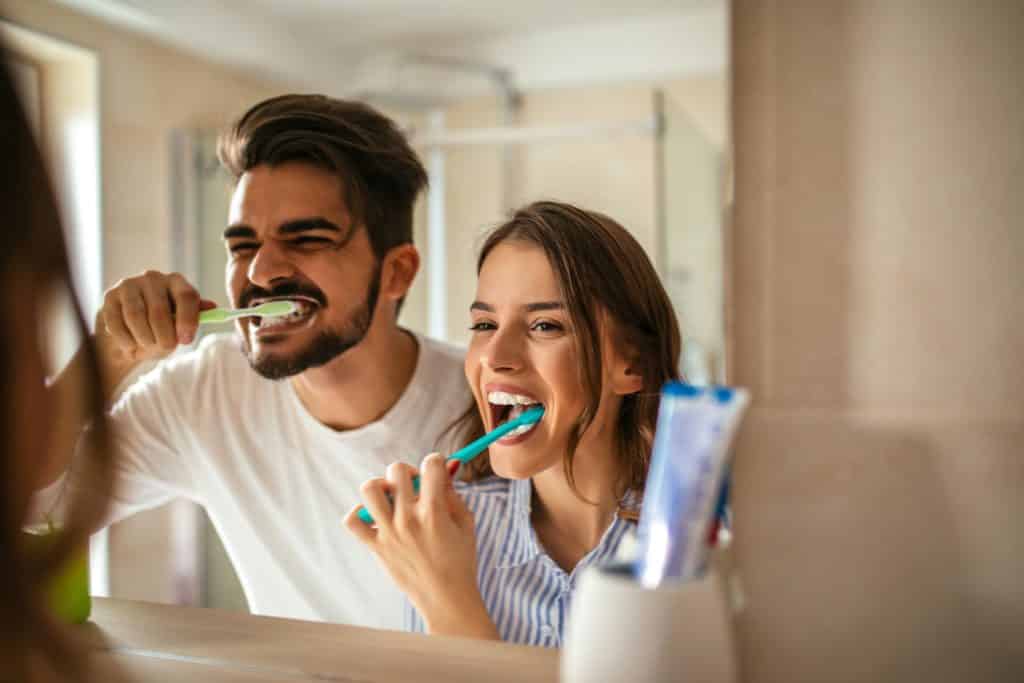
It’s not about scrunching down and using force; it’s about how you brush, not how hard.
- Hold your brush at a 45-degree angle, pointing towards those gum lines
- Use gentle circular motions; no need to scrub away
- Get the outside, inside & the chewing surfaces of all those teeth in there (don’t forget the ones up top)
- Brush twice daily for 2 minutes; take about 30 seconds on each quadrant.
Just pay extra attention to where all the gunk tends to build up: those gum lines, the back of your lower front teeth, and your molars.
Don’t be a scrubber; that’s just going to damage your enamel and cause gum recession. And if you’ve got those pesky brackets or dental work, just kind of angle the bristles around it. Then spit without rinsing and let the fluoride stick around a bit longer; that’s the ticket.
Clean Between Your Teeth Like a Dentist
Brushing alone isn’t going to get you 100%; it leaves up to 40% of those tooth surfaces untouched. That’s where flossing comes in.
Pick your tool:
| Tool | Best for |
| Traditional floss or floss picks | Tight contacts between teeth |
| Interdental brushes | Wider gaps, black triangles, around bridges |
| Water flosser | Braces, implants, sensitive gums, limited dexterity |
Proper Flossing Technique
Use about 45cm of floss wrapped around your middle fingers, then curve it into a C shape around each tooth and gently slide below the gum line a few times. Don’t snap it; just slide up and down 5-10 times; that’s all the gunk you want gone.
Get the largest interdental brush that fits comfortably in, move it in and out a few times, and rinse, but be gentle; you don’t want to scrape enamel off.
If you’ve got trapped food particles stuck, a non-sharp dental pick might do the trick, but never use metal to scrape enamel or clean beneath the gums. And don’t even think about using a sharp tool at home.
Clean those teeth once a day, before bed is ideal, so all that fluoride can get to work on keeping your teeth nice and clean.
Upgrade Your Routine: Mouthwash, Tongue Cleaning, Smart Extras
Time to level up your oral game. Once brushing and flossing become second nature, making these additional changes can really help boost freshness and reduce bacteria.
- Mouthwash: We recommend using an alcohol-free fluoride rinse to protect your enamel. However, chlorhexidine mouthwash is usually only recommended for short periods of time under the guidance of a dentist. Make sure to rinse at a different time than when you brush your teeth, so you’re not washing away the fluoride.
- Tongue cleaning: Gently scraping from back to front a few times can do a world of good for reducing bacteria and bad breath. Just be sure to do it gently.
- Baking soda: A mild rinse every now and then may help neutralise acids, but avoid using it as a daily scrubber; it can be harsh on your gums and wear away your enamel. And remember, home remedies are no substitute for a professional scale and polish from your dentist.
Protecting Your Mouth From Gum Disease and Erosion: Enamel & Dental Work
Your daily habits really do have an impact on your gums, enamel and dental work.
- Diet: Try to limit sugary snacks, and avoid acidic drinks; save them for meal times and give your teeth a wash with some water afterwards.
- Sugar-free gum: Xylitol can be a real game-changer; it helps stimulate saliva production, which can really help to neutralize acids in between brushings.
- Smoking & vaping: Sorry to say it, but they both really up your chances of gum disease, tooth loss and even implant failure; quitting is the best thing you can do for your oral health.
- Dental work: If you’ve got implants or bridges, take the time to clean around them with interdental brushes or a water flosser, and take care not to bite down on anything too hard with your front crowns; and if you do grind your teeth, then get yourself a night guard.
Healthy gums that don’t bleed, minimal plaque, and fresh breath are all really good signs that you’re doing something right, not just a gleaming white smile.
Why You Still Need Regular Professional Cleanings
No matter how good you are at taking care of your teeth at home, there are still things that a dentist can do that you can’t. They can get rid of hardened tartar and clean deep gum pockets, which is why getting in the dental chair for regular cleanings and check-ups is so essential for long-term oral health.
Most adults should aim to come in for a clean every six months, but if you’ve got gum disease, diabetes, smoking habits, or a lot of dental work, then you might need to come in a bit more often, every 3 to 4 months. These appointments let your hygienist check on your gum health, fillings, crowns, implants and pick up on problems early on, often preventing more complicated treatment.
Bring your toothbrush and show your hygienist how you brush at your next visit; they can probably suggest a few tweaks to master proper technique.
A good home routine combined with regular trips to the dentist is the key to keeping a healthy smile all year round.
FAQ
Can I really do a “deep clean” at home?
You can get rid of the visible plaque on the surface of your teeth, but tackling the stuff below the gums is best left to the professionals; scraping at it yourself can cause injury or infection. Stick to good old-fashioned brushing and interdental cleaning.
What if my gums bleed?
Bleeding gums usually indicate plaque-related inflammation, not a reason to stop cleaning. Avoid aggressive brushing by using a soft-bristled toothbrush and gentle flossing or interdental brushes. If bleeding continues for more than two weeks, or you notice loose teeth or receding gums, schedule a dental visit.
How do I keep my teeth clean if I’ve got braces?
Get yourself an electric toothbrush with an orthodontic head and clean above and below the brackets, and use a water flosser, super floss, or interdental brushes around the wires and retainers. Most people with braces find that coming in every 3 to 4 months for a clean is a good idea.
Is baking soda safe to use every day?
No, it’s not. Occasional use is usually fine, but daily scrubbing can wear away your enamel and irritate your gums. Stick to using fluoride toothpaste as your go-to every day.
How can I tell if my teeth are really clean?
Run your tongue along your gum line to feel for any rough bits of plaque, or use a mirror to check for any deposits. Only a regular dental check-up can really confirm whether there’s any tartar or gum disease lurking below the surface.