
Deciding on which preventative dental treatments your kids need can be a real headache. But one of the simplest and most effective ways to prevent dental caries is pediatric dental sealants. And yet, many parents are still left wondering how they work and whether they’re worth it. So here’s the lowdown.
- Pediatric Sealants are a thin, protective coating applied to the tooth Surface of children’s back teeth, usually around ages 6 and 12. They create a physical barrier that helps prevent food and bacteria from causing cavities.
- They can prevent up to 80% of cavities in sealed molars during the first two years and continue protecting teeth for several years, reducing the risk of early decay.
- Modern sealants are safe, virtually BPA-free, and recommended by organizations such as the ADA and CDC, making them a trusted preventive treatment in children’s dentistry.
- The procedure is quick, painless, and non-invasive, requiring no drilling or injections.
- Sealants are often covered by insurance and can help families avoid more expensive dental treatments in the future.
Pediatric Dental Sealants Key Points:
So what are these sealants all about? They’re thin, tooth-colored or clear protective coatings applied to the chewing surfaces of molars and some premolars. They seal the deep grooves where food and bacteria tend to collect, creating a barrier that helps prevent cavities while reducing your child’s exposure to tooth decay.
Unlike fillings, which repair teeth after damage has occurred, sealants are a preventive Dental Care treatment applied to healthy teeth before cavities develop. They’re typically made from a BPA-free resin that hardens within seconds using a special curing light. This quick, painless procedure is safe for young patients and provides long-lasting protection against decay.
Since they only cover the chewing surfaces of back teeth, they’re pretty much invisible when your kid smiles with them in, and they provide durable protection against tooth decay.
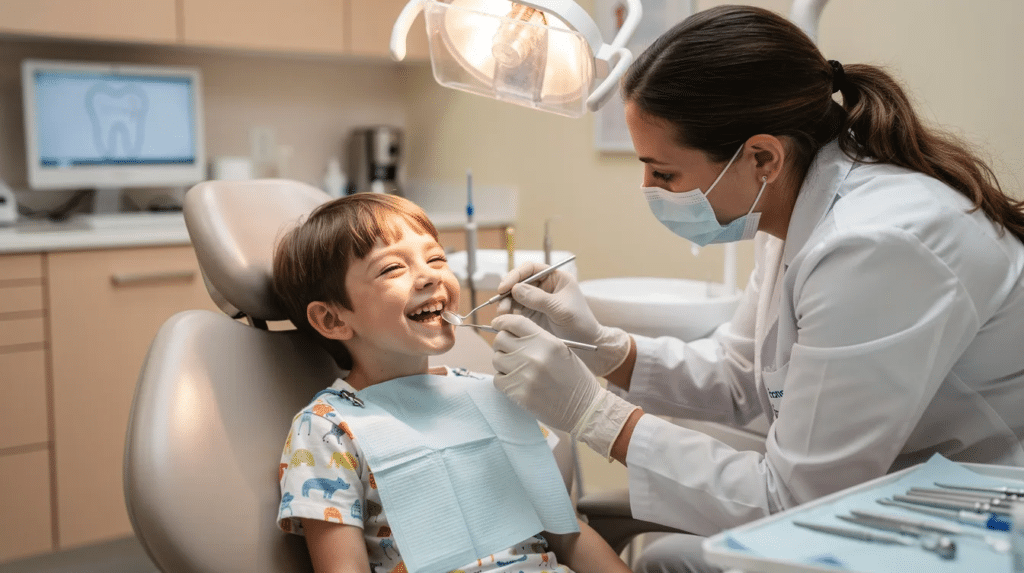
Benefits of Dental Sealants for Kids
Most childhood cavities develop on the chewing surfaces of back teeth, so sealants are like a special protective shield for that bit of the mouth.
- Prevent cavities. Sealants can prevent up to 80% of cavities in sealed molars for the first couple of years and keep on protecting for about half as many for up to four years.
- Fewer dental treatments. By stopping cavities from forming in the first place, sealants mean your kid won’t need as many fillings or other dental work.
- Long-lasting protection. With a little bit of care, sealants can last for 5-10 years and can be easily repaired or replaced if they get worn down.
- Cost-effective. Sealants are usually around $30-$60 per tooth, which is a lot cheaper than filling a cavity with a filling.
When Should Kids Get Dental Sealants?
The best time for sealant placement is right after the permanent molars erupt, before any cavities can form.
- Around age 6-7: First permanent molars.
- Around age 11-13: Second permanent molars.
Some kids may also get sealants on baby teeth if they’ve got deep grooves or are at high risk of getting cavities. And older kids, teens, and even adults with healthy molars can benefit from them too.
How Are Dental Sealants Applied In Pediatric Dentistry
Getting sealants is a really quick and painless process that needs no drilling or anaesthetic at the dentist’s appointment.
It’s a pretty simple process:
- Get the tooth nice and clean and dry.
- Put some gentle etching gel on to help the sealant stick.
- Rinse the tooth and dry it again.
- Paint the sealant into the grooves.
- Shine a special light on it to harden it up.
The whole thing takes just a few minutes per tooth, and most kids can go back to eating straight away, although it’s worth avoiding really sticky foods for 24 hours or so.

Safety, Longevity and Maintenance of Dental Sealants
Sealants are completely safe and recommended by both the ADA and CDC. Modern sealants are BPA-free or contain only tiny amounts that are well within safe limits.
With a bit of care, sealants will last for 5-10 years. Your kid’s dentist will check on them at their regular dental check-ups and can repair any worn areas if needed. Even with sealants, it’s still super important to get your kid to brush twice a day, floss every day, and get regular check-ups.
Insurance and Alternatives to Sealants
Most dental insurance plans, as well as Medicaid and CHIP, will cover them for eligible kids. And since Composite fillings cost $45 USD per tooth, sealants are a pretty cost-effective way to prevent all that future dental work.
You should check out with your Dental Insurance Provider if they do cover services provided outside of their network/USA; if they do, we’ll be glad to help you fill out any reimbursement forms you may need.
By the way, one of the best things you can do to prevent cavities is to:
- Brush your kids’ teeth twice a day with fluoride toothpaste
- Floss every day
- Get your kid some professional fluoride treatments now and then
- Try to limit sugary foods and drinks as much as possible
Some good habits are nice to have, but they don’t quite replace the protective barrier that sealants give.
Helping Your Child Care for Sealed Teeth
Sealants work best when combined with good daily oral hygiene.
- Brush 2 times a day with fluoride toothpaste and keep an eye on the little ones.
- Cut back on sugary snacks & drinks to lower the chances of cavities popping up.
- Get your child to the dental hygienist every 6 months to check up on their sealants and do any repairs needed.
With a routine of looking after teeth and a healthy lifestyle in place, sealants should be able to give your child a protected smile all through school and way beyond.

FAQ:
Are Dental Sealants Safe?
Yes. Dental sealants are considered safe and have been recommended for decades by the American Dental Association (ADA) and the Centers for Disease Control and Prevention (CDC) to help prevent cavities in children.
Do Pediatric Dental Sealants affect the Natural tooth Structure?
No, pediatric dental sealants do not alter, damage, or remove natural tooth structure. Dental sealants are completely non-invasive and additive. Unlike fillings or crowns, which require removing a portion of the tooth’s enamel or dentin to repair damage, sealants simply rest on top of the existing enamel.
Will my kid still get cavities if they have dental sealants?
Yeah, sealants on their own don’t stop cavities from forming. They’re only protecting the chewing surfaces. And if a sealant chips, that’s another story. Just remember the importance of brushing, flossing, and regular dentist visits.
Do dental sealants make cleaning my child’s teeth any harder?
Nope. Sealants actually make cleaning way easier because they fill in those deep grooves where all the food particles and plaque tend to collect. Brushing is still the same and helps keep their teeth and gums nice and healthy.
How am I going to know when a sealant has got damaged or started to wear away?
Not many people can pick out a damaged sealant from just looking at their teeth at home. That’s why regular visits to the dentist are so important. That way your kid’s dentist can check and sort out any issues before they become a major problem.
Will my kid be okay to play sports or wear braces with sealants in place?
Yes, they can. Sealants don’t interfere with braces, mouthguards, or anything like that. Kids in contact sports should, of course, wear a properly fitting mouthguard.
What should I ask the paediatric dentist before my kid gets sealants put on?
Ask what teeth need sealants, how long they’re going to last, what sealant material they use, and whether the insurance covers the cost. It’s also a good idea to let them know about any allergies or anxieties your kid has so they can tailor the visit for them.